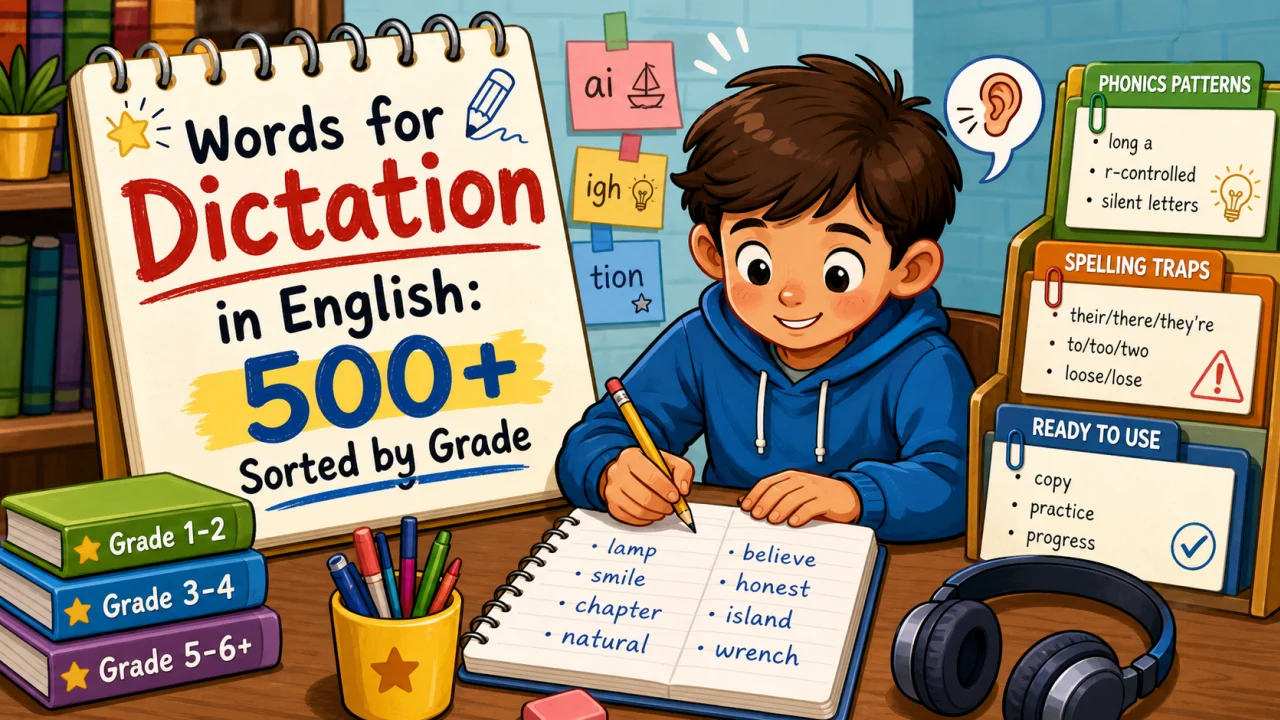
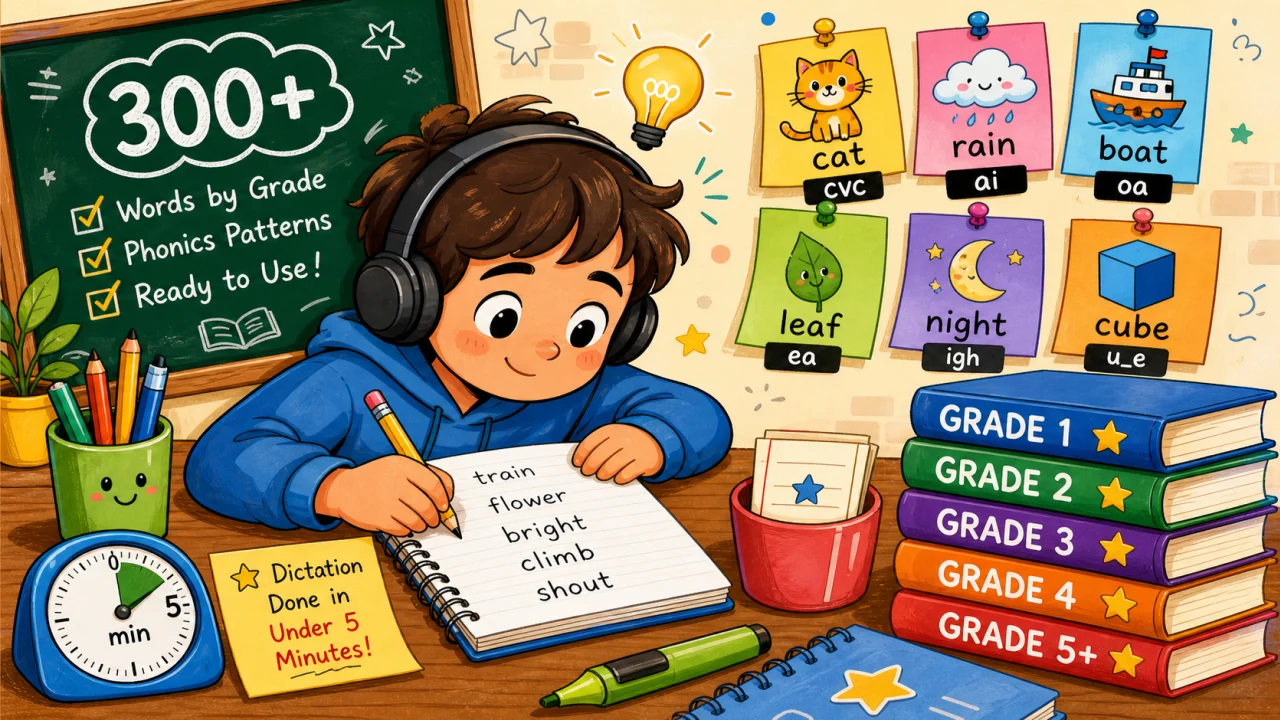
备好一张词汇表,孩子的英语听写练习就能立刻开始——不用拼凑五六个网站,也不用自己从零想词。下面整理了300+个英语听写单词,按年级和自然拼读规律分类,可以直接读给孩子听、当场使用。每个列表在前一个的基础上逐步加难,从三字母基础词稳步过渡到多音节词汇,不留学习空白。
英语听写单词和普通单词表有什么区别?
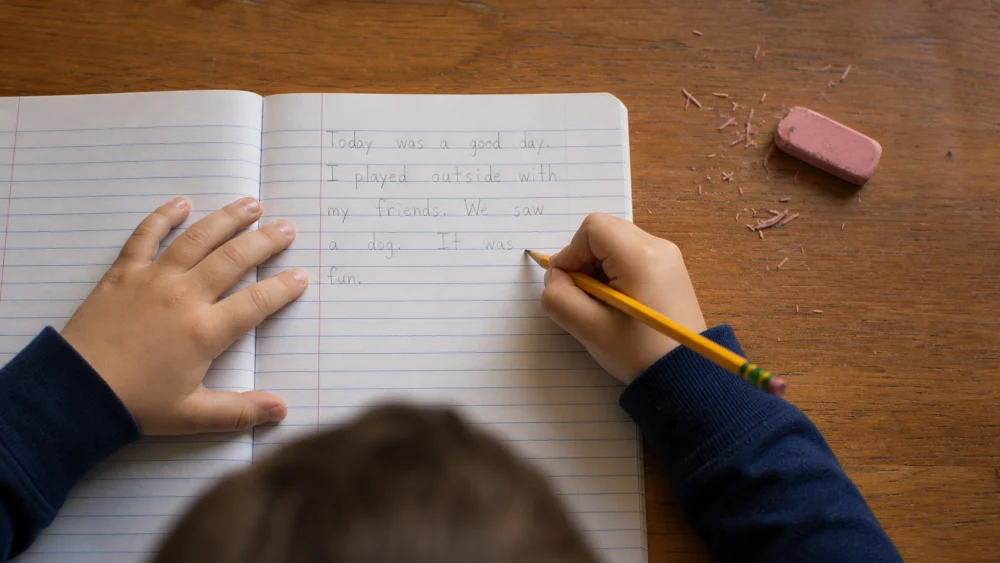
听写的做法是:家长或老师读出单词,孩子只靠耳朵把它写下来。这和普通单词表的本质区别在于——孩子始终看不到那个词,每一个字母都必须从脑子里"提取",而不是从纸上"复制"。
这一个动作同时训练四项能力:听力、自然拼读、拼写和书写。NCERT国家课程框架的研究综述指出,每周练习听写3至5次的学生,拼写留存率明显高于只靠默读或抄写的同龄人。国内英语老师的日常观察也印证了这一点:先听后写的孩子,比死记字母顺序的孩子表现要好得多。
怎么给孩子选对难度的听写单词?
给一年级孩子报"psychology"毫无意义,给五年级孩子听写"cat"则是在浪费时间。难度是怎么一步步递进的?看下面这张路线图。
初学阶段:CVC三字母词(5至6岁)
cat、pen、bus 这类词,结构是"辅音-元音-辅音",一个音对应一个字母,没有例外,最适合打基础。
进阶阶段:辅音组合与字母组合(6至7岁)
train、brush、cherry 这类词里出现了辅音连缀(tr-、br-)或两个字母合发一个音(sh、ch、th)。很多孩子在这里开始卡壳,因为"一个音对应一个字母"的规则不再成立。
成长阶段:多音节词(8至9岁)
village、market、animal 这类词要求孩子在大脑里保存更多音节信息,再落笔写出来。
挑战阶段:不发音字母与复杂词尾(9至11岁)
knife、honest、attention 这类词打破了"写你听到的"规则——不发音字母和 -tion/-sion 发音相同却拼写不同,孩子必须靠记忆区分。
高阶阶段:学术词汇(11至14岁)
independence、psychology、appreciation 这类抽象词考查的不只是拼读,还有词根知识。
一年级英语听写单词(30+词,按拼读类型分组)
CVC三字母词: cat, dog, hat, sun, pen, pin, cup, bus, jug, man, bag, mat, pot, fan, top, hen, fox, leg, bed, run
四字母基础词: book, ball, fish, kite, tree, milk, frog, star, lion, duck, cake, ring, drum, lamp, doll
动作词: sit, hop, eat, run, jump
二年级英语听写单词(35+词,按规律分类)
辅音连缀(tr, st, fl, gl, br): train, truck, star, stop, flag, flat, glass, glue, brave, bread
字母组合(sh, ch, th, wh): ship, shop, chair, cherry, three, thin, when, what, brush, cloth
双音节词: tiger, river, water, paper, sugar, lemon, table, music, happy, garden
自然与动物: cloud, plant, leaf, stone, beach, zebra, panda, snake
三年级英语听写单词(35+词,含双辅音)
双辅音词: rabbit, butter, kitten, muffin, mitten, happen, balloon, pillow, puzzle, coffee
长元音规律(ai, ee, oa): brain, chain, street, cheese, coach, toast, dream, clean, float, speak
三音节词: purple, honest, winter, village, market, cherry, animal, buffalo, hospital, beautiful
四年级英语听写单词(40+词,含不发音字母与 -tion 词尾)
不发音字母: knife, knee, knock, write, wrap, lamb, comb, climb, hour, honest
-tion / -sion 词尾: nation, station, action, motion, lesson, mission, vision, decision, addition, attention
进阶词汇: journey, accident, emotion, laughter, weather, capture, future, patient, neighborhood, temperature, calendar, library, February, different, separate
你有没有发现一个规律?四年级正是大多数孩子开始觉得拼写很头疼的时候——因为英语从这里开始不再"按发音老实拼"了。
五年级英语听写单词(40+多音节词)
comfortable, poetry, environment, courageous, lavender, attitude, gratitude, refrigerator, compulsory, thoughtfulness, knowledge, schedule, restaurant, bicycle, vegetable, dangerous, guarantee, disappear, necessary, especially, description, experience, immediately, recognize, accomplish, celebration, temperature, communicate, imagination, opportunity, particular, secretary, vocabulary, curiosity, experiment, extraordinary, responsible, recommendation, interference, kindergarten
六至八年级英语听写单词(50+抽象与学术词汇)
六年级: encyclopedia, psychology, column, philosophy, technology, insurance, vacuum, rhythm, exaggerate, privilege, occurrence, embarrass, amateur, conscience, pronunciation, parallel, maintenance, acquaintance
七年级: investigation, exhaustion, performance, nutrition, appearance, malfunction, catastrophe, achievement, interference, magnificent, surveillance, lieutenant, parliament, sovereignty
八年级: independence, patriotism, communication, appreciation, questionable, longevity, vengeance, miscellaneous, conscientious, perseverance, accommodate, bureaucracy, mischievous, superintendent
九至十年级英语听写单词(40+标准化考试高频词)
这些词在SAT、ACT及各类英语水平测试中反复出现,值得专项练习:
acquiesce, benevolent, cacophony, diligent, ephemeral, fastidious, gregarious, hypothesis, idiosyncratic, juxtaposition, kinesthetic, loquacious, meticulous, nonchalant, ostentatious, paradox, quintessential, recalcitrant, surreptitious, tenacious, ubiquitous, vicarious, whimsical, xenophobia, ambivalent, camaraderie, deteriorate, entrepreneur, fluorescent, hemorrhage, inoculate, millennium, pharmaceutical, questionnaire, reconnaissance, sacrilegious, threshold, unanimous, reconnaissance, bourgeois
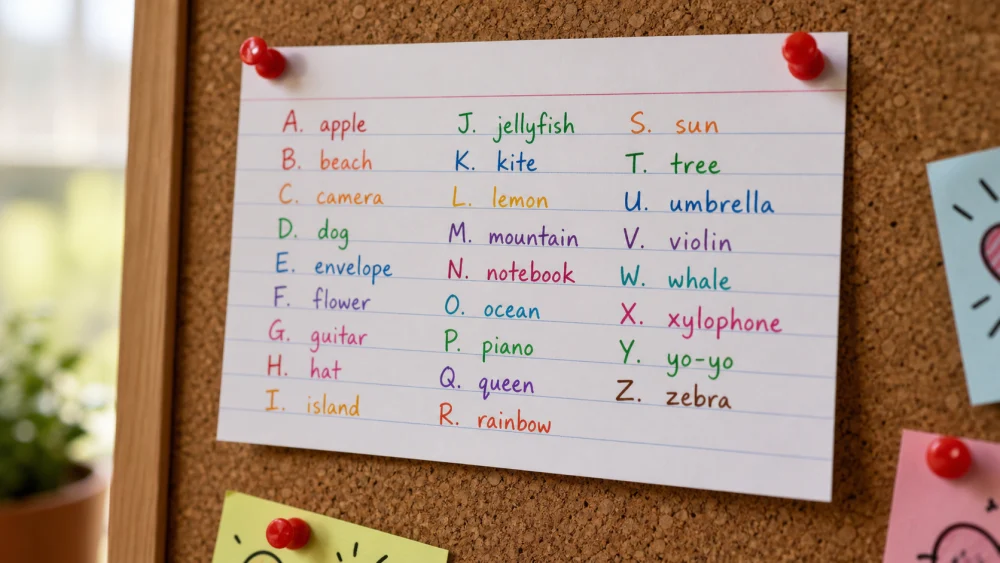
A到Z英语听写单词速查表
- A — accomplish, ambition
- B — benefit, bicycle
- C — courage, campaign
- D — diversity, development
- E — environment, evidence
- F — freedom, foundation
- G — generation, guarantee
- H — hospitality, harmony
- I — inspiration, inoculate
- J — journalism, journey
- K — knowledge, kinship
- L — leadership, literature
- M — motivation, management
- N — nostalgia, necessary
- O — opportunity, observation
- P — perception, performance
- Q — questionnaire, quickness
- R — resilience, responsibility
- S — surveillance, strength
- T — teamwork, tradition
- U — understanding, ubiquitous
- V — victory, vicarious
- W — wisdom, whimsical
- X — xenophobia, xylophone
- Y — yearning, youth
- Z — zeal, zenith
5分钟完成一次听写练习:三步走
不需要单词卡、不需要App,也不需要专业资质。一支铅笔加一张安静的桌子就够了。
第一步:从对应年级表里挑10个词
10个是最合适的量。一二年级的孩子可以从5至8个开始,高年级孩子可以增加到15个。
第二步:每个词读两遍,中间停5至8秒
用正常语速清楚地读出单词,不要刻意切音节。读第二遍,停顿,再念下一个。
第三步:读完全部词后让孩子自查
最后一个词念完后,把10个词再完整读一遍,让孩子自行核对。然后逐个一起过,让孩子用彩笔标出写错的地方——不要直接擦掉重写,视觉上的错误记号会帮助记忆。
大多数家长都会犯的一个错:跳过上次写错的词
这是几乎所有听写词表都不提的关键环节。
很多家长第二天直接换一批新词,感觉像在推进进度。但昨天写错的词呢?下个月还会错。解决方法很简单:每次新练习开始时,先把上次写错的3至5个词重新测一遍。一个词只有在连续三天都能写对之后,才可以从复习列表里移除。这种间隔重复的方法,正是听写在长期记忆效果上优于被动阅读的核心原因。
在线练习英语听写单词的免费工具
如果你不想自己读词,又想要有音频配合的练习,以下两个免费平台值得一试。Speechling英语听写工具 提供从初级到高级的大量句子练习,支持美式和英式发音,无需注册即可使用。Daily Dictation 则采用真实语音片段作为听力素材,风格更接近自然口语。两个平台都是免费且不需要注册的。
常见问题
初学者最适合哪些英语听写单词?
三字母CVC词,比如 cat、sun、pen、dog、hat。每个字母对应一个发音,孩子只需要把三个音和三个字母对上号,没有例外规则。
每次听写应该练多少个词?
一二年级5至8个,三至五年级10个,六年级及以上可以到15至20个。单次练习超过20个,准确率会下降,但对学习效果没有明显提升。
听写比单词卡更有效吗?
在拼写和听力方面,听写更有优势。听写要求孩子听完单词后从记忆中提取拼写,单词卡则只需要视觉识别。两种方式各有价值,但听写建立的主动提取能力更强。
哪类英语单词最容易写错?
带不发音字母的词(knife、psychology)、双辅音词(accommodate、embarrass)以及 -tion 和 -sion 词尾这三类最容易出错,因为它们都打破了"按音拼写"的规律。
孩子每周练几次听写比较好?
每周三至五次短练习,效果远好于一周一次的长练习。分散练习能强化长期记忆——和语言学习App里使用的间隔重复原理完全一致。