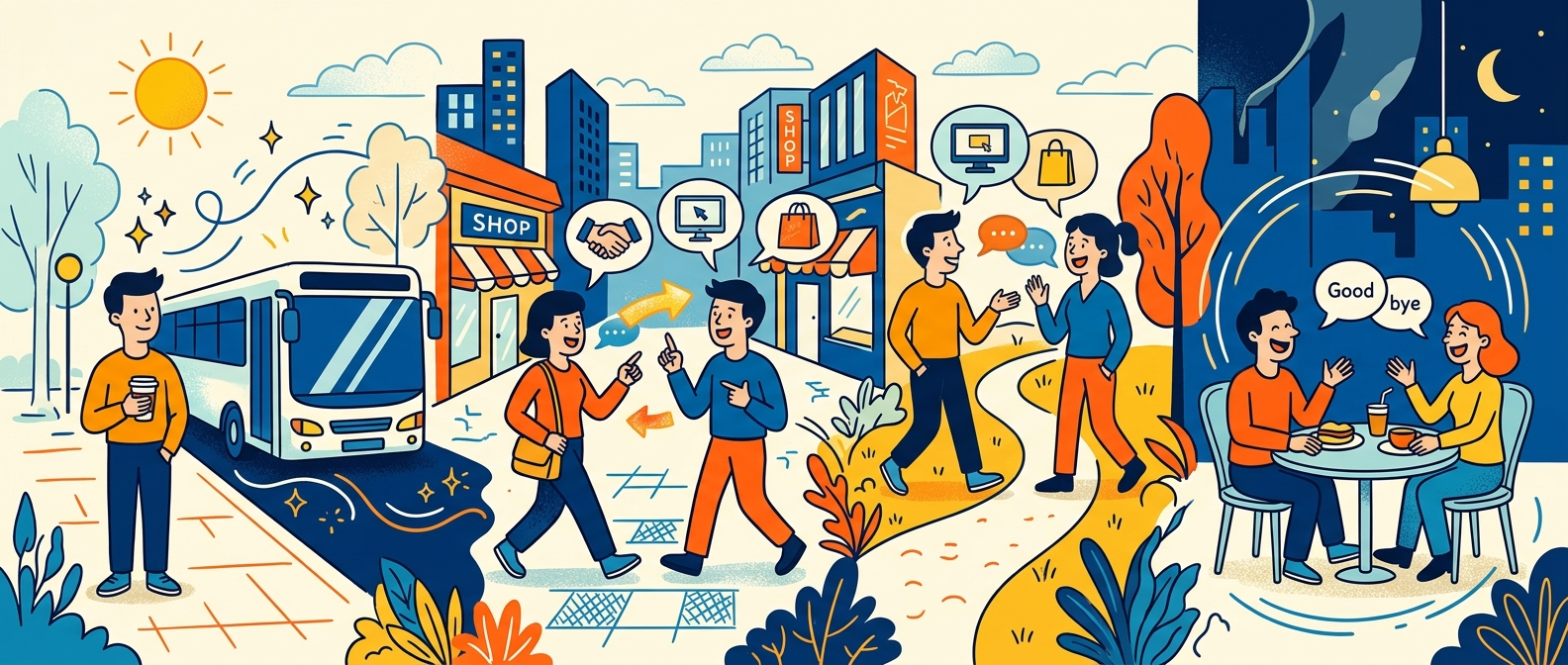
If you have ever studied English but still freeze during a real conversation, you are not alone. The problem is not your grammar — it is the daily use english sentences you were taught. Most textbooks are full of stiff, old-fashioned phrases that no native speaker actually uses. This guide fixes that. Below you will find 100 sentences real people say every single day in the United States, sorted by situation so you can start using them right away.

Key Takeaways
These 100 sentences come from real everyday conversations, not textbooks. They are grouped by situation — greetings, shopping, work, emotions, and more — so you know exactly when to use each one. You do not need to memorize all 100 at once. Pick 10 per day, practice them in context, and you will sound noticeably more natural within two weeks. The biggest secret to fluency is not learning more words — it is learning the right sentences that native speakers actually repeat every day.
Why Most English Learners Use Sentences Nobody Actually Says
The Gap Between Textbook English and Real-Life English
Textbooks love phrases like "How do you do?" or "I am fine, thank you, and you?" Here is the truth: almost nobody talks like that in everyday American English. A native speaker is far more likely to say "Hey, what's up?" or just "Good, you?" The gap between classroom English and street English is huge, and it is the number one reason learners feel stuck even after years of study.
How This List Was Curated from Native Speaker Patterns
Every sentence in this list was chosen because it is something you would hear in a regular day in the United States — at the grocery store, in the office, on a phone call, or hanging out with friends. These are not fancy literary phrases. They are short, simple, and used over and over again by millions of people. That repetition is exactly what makes them powerful for learners.
How to Use This List to Improve Your Fluency Fast
Practice Strategy: The 10-Sentence Daily Method
Do not try to swallow all 100 sentences in one sitting. Instead, pick one category each day and focus on just 10 to 15 sentences. Say them out loud. Record yourself. Use them in a text message to a friend. The goal is to move each sentence from your "reading brain" to your "speaking brain," and that only happens through active practice.
Context Over Memorization — Why Situations Matter
Memorizing a sentence without knowing when to use it is like owning a key without knowing which door it opens. That is why this list is organized by real-life situations. When you learn "Can I get a large iced coffee?" under the shopping and dining section, your brain files it in the right mental folder. Next time you walk into a café, it pops up automatically.
100 Daily Use English Sentences by Everyday Situation
Greetings and Small Talk (Sentences 1–15)
- Hey, how's it going?
- What's up?
- Long time no see!
- How have you been?
- Good to see you!
- What's new with you?
- Not much, just the usual.
- How's your day going?
- Pretty good, thanks.
- I'm doing well, how about you?
- Nice weather today, right?
- Have a good one!
- Take care!
- See you later!
- It was nice talking to you.
Asking Questions and Getting Information (Sentences 16–30)
- Do you know where the nearest ATM is?
- What time does this place close?
- How do I get to the train station?
- Is this seat taken?
- Can you say that again?
- What does that mean?
- How do you spell that?
- Do you have Wi-Fi here?
- Where is the restroom?
- How long does it usually take?
- Is there a line?
- What do you recommend?
- Does this come in a different size?
- Can I ask you a quick question?
- Do you happen to know…?

Expressing Opinions and Agreeing or Disagreeing (Sentences 31–45)
- I think so too.
- That's a good point.
- I totally agree.
- I see what you mean.
- I'm not sure about that.
- I don't think that's right.
- That makes sense.
- I feel the same way.
- To be honest, I disagree.
- You might be right.
- I never thought of it that way.
- Fair enough.
- That's true, but…
- I get where you're coming from.
- Let's just agree to disagree.
Making Requests and Offering Help (Sentences 46–55)
- Could you help me with this?
- Would you mind opening the door?
- Can I borrow this for a second?
- Let me know if you need anything.
- I'd be happy to help.
- No problem at all.
- Do you need a hand?
- Can you do me a favor?
- I really appreciate it.
- Thanks so much, you're a lifesaver.
Shopping, Dining, and Running Errands (Sentences 56–70)
- Can I get a large iced coffee?
- I'm just looking, thanks.
- How much is this?
- Do you take credit cards?
- Can I get the check, please?
- I'd like to return this.
- Is this on sale?
- Do you have this in a medium?
- I'll have what she's having.
- Could I get a to-go box?
- Keep the change.
- Where's the fitting room?
- I'm ready to order.
- Can I see the menu?
- This tastes amazing.
Work and Professional Conversations (Sentences 71–85)
- Let me check my schedule.
- I'll get back to you on that.
- Can we set up a meeting?
- Sounds good to me.
- I'll keep you posted.
- Just following up on my last email.
- Sorry, I was on mute.
- Can you share your screen?
- Let's circle back to that.
- I'm running a few minutes late.
- Does that work for everyone?
- I'll send it over by end of day.
- Thanks for the heads-up.
- Let me loop you in.
- I'm swamped right now.
Emotions, Reactions, and Casual Responses (Sentences 86–100)
- No way!
- Are you serious?
- That's hilarious.
- I'm so tired.
- That's awesome!
- I can't believe it.
- Honestly, same.
- That's so annoying.
- I'm really happy for you.
- That's a bummer.
- I had no idea.
- You're kidding me.
- It is what it is.
- I'm over it.
- That just made my day.
Common Mistakes to Avoid When Using These Sentences
Direct Translation Traps from Your Native Language
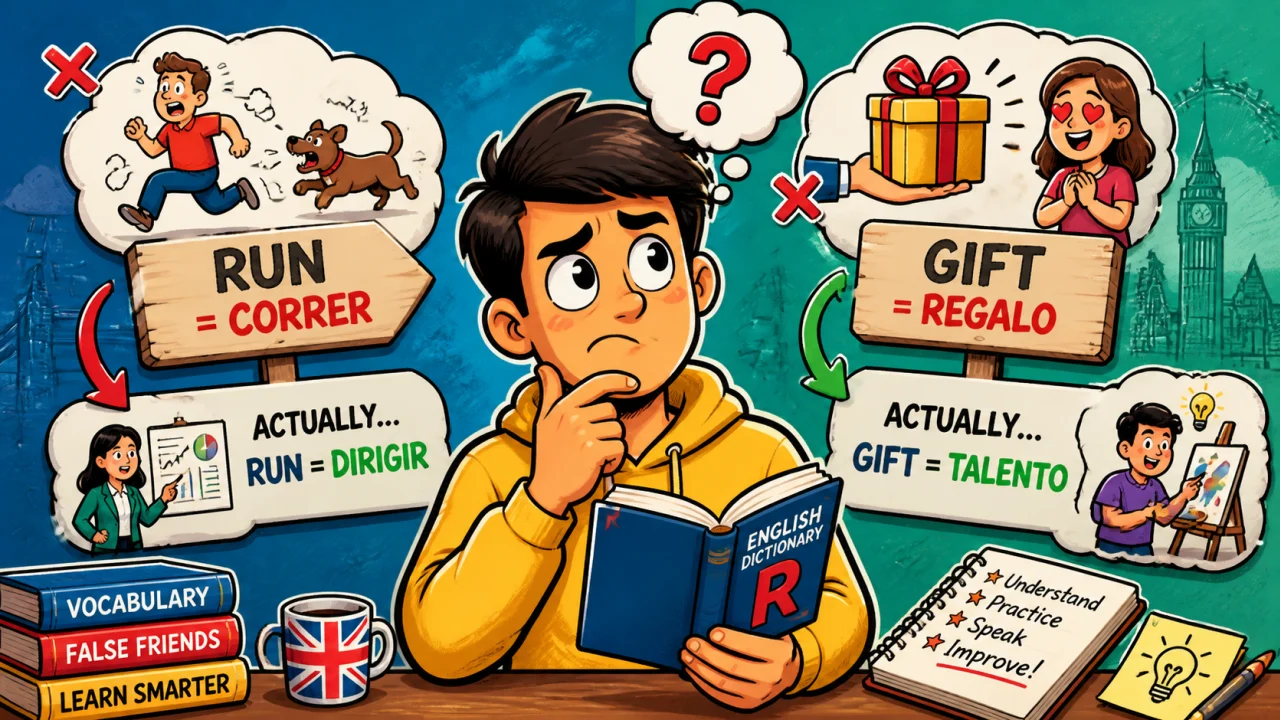
One of the biggest mistakes is translating word-for-word from your first language. Every language has its own way of saying things. For example, in many languages the literal translation of "I have 25 years" is how you say your age — but in English we say "I'm 25 years old." When you learn daily use english sentences as complete chunks instead of building them word by word, you skip these traps entirely.
Tone and Delivery — The Words Are Only Half the Message
Saying the right sentence with the wrong tone can completely change its meaning. "Sure" can mean "yes, absolutely" or "I don't really care" depending on how you say it. Pay attention to how native speakers deliver these sentences — their speed, pitch, and facial expressions. Watching American TV shows, YouTube vlogs, or podcasts is a fantastic way to absorb the natural rhythm.
What to Do After You Master These 100 Sentences
Level Up with Phrasal Verbs and Idioms
Once these 100 daily use english sentences feel easy, the next step is phrasal verbs and idioms. These are the secret ingredients that make your English sound truly native. Phrases like "figure out," "run into," and "hang in there" pop up constantly in American conversations. Start collecting them the same way you collected these sentences — in context, by situation.
Free Resources to Keep Practicing Every Day
You do not need expensive courses. Listen to English podcasts during your commute. Change your phone's language to English. Chat with language exchange partners online. Watch movies with English subtitles instead of subtitles in your language. The key is daily contact. Even 15 minutes a day adds up to nearly 100 hours a year — that is more than enough to see real progress.
Frequently Asked Questions
What are the most common daily use English sentences for beginners?
The most useful ones for beginners are simple greetings and basic requests. Sentences like "How's it going?," "Can I get…?," and "Thank you so much" cover a surprising number of everyday situations. Start with the greetings and shopping sections above and you will be able to handle most casual interactions.
How can I practice English sentences by myself at home?
Read each sentence out loud, then record yourself and listen back. Practice in front of a mirror so you get comfortable with mouth movements. You can also write short dialogues using the sentences and act out both sides of the conversation. Talking to yourself in English is one of the most effective solo practice methods.
What is the fastest way to memorize English sentences for daily use?
Use them immediately. The fastest path from reading to remembering is real use. Text a friend using one of these sentences. Say them while cooking dinner. Stick a few on your bathroom mirror. Spaced repetition — reviewing sentences at growing intervals — also works incredibly well. The 10-sentence daily method described above is built on this principle.
Are these sentences used in American English or British English?
This list focuses on American English since it targets speakers in the United States. However, the vast majority of these sentences are understood and used in British English, Australian English, and other varieties too. A few choices — like "Can I get…" instead of "Could I have…" — lean more American, but they will be understood everywhere.
Can I use these daily English sentences for IELTS or TOEFL preparation?
Absolutely. The speaking sections of IELTS and TOEFL reward natural, fluent responses over memorized academic phrases. Using sentences that native speakers actually say helps you sound more confident and authentic, which can boost your speaking score. Just remember to adjust your formality level depending on the question type.