
What if you could learn English with words — just 500 of them — and suddenly understand most of what people say around you? It sounds too simple, but it's backed by real research. A small set of high-frequency words makes up the vast majority of everyday English. This guide breaks down exactly which words those are, how to study them, and how to go from zero to conversational in 30 days.
Key Takeaways
- Just 500 carefully chosen English words cover roughly 80% of everyday spoken conversation.
- These words come from real-world language data, not textbooks.
- Learning words in context — inside sentences, stories, and conversations — beats memorizing random lists.
- Spaced repetition is the single most effective technique for making vocabulary stick.
- A focused 30-day plan can take you from beginner to conversational basics.
Why Learning 500 Words Can Transform Your English
The 80/20 Rule of Language Learning Explained
You've probably heard of the 80/20 rule (also called the Pareto Principle). It says that roughly 80% of results come from 20% of the effort. In language learning, this idea is incredibly powerful. A small core of English words does most of the heavy lifting in daily life.
Think about it this way: when you chat with a friend, order food, or send a text message, you're not using rare or fancy vocabulary. You're using the same common words over and over — words like "I," "you," "want," "go," "good," "time," and "thing."
When you learn English with words chosen for their frequency, you skip the fluff and focus on what actually matters.
What Research Says About High-Frequency Vocabulary
Linguists have studied millions of words from books, movies, conversations, and news articles. What they found is consistent: a surprisingly small number of words appear again and again. The top 100 English words alone account for about 50% of all written text. Expand that to 500 words, and you're covering around 80% of casual, everyday conversation.
This doesn't mean you'll understand every single thing someone says. But it does mean you'll follow the main idea of most conversations — and that's a massive confidence boost for any learner.
How the 500 Essential Words Were Selected
Corpus Linguistics and Word Frequency Data
The 500 words in this guide aren't pulled from a hat. They come from a field called corpus linguistics, which studies huge collections of real language (called "corpora"). Researchers analyze billions of words from spoken conversations, TV shows, social media, news, and books to rank which words appear most often.
Word frequency lists like the General Service List and the New General Service List are well-known examples. These lists rank English words by how often they show up in real communication, giving learners a data-driven roadmap.
Real Conversations vs. Textbook Vocabulary
Here's a problem with most English textbooks: they teach words that look good on paper but rarely come up in real life. How often do you actually say "photosynthesis" or "parliament" in a casual chat? Almost never.
The 500 essential words prioritize spoken, everyday English — the kind you hear at a grocery store, in a work meeting, or during a phone call with a friend. That's where the real payoff is when you learn English with words chosen for practical use.
The 500 Essential English Words Organized by Category
Below is a snapshot of how the 500 words break down. The full list is long, so here are the main categories with examples to give you a feel for what's included.
Everyday Nouns (People, Places, Things)
These are the building blocks of any sentence. Examples include: people, man, woman, child, friend, family, house, school, work, car, food, water, money, city, country, day, night, year, world, way, time, place, thing, name, life, part, hand, room, door, and story.
Common Verbs and Action Words
Verbs are the engine of English. The most essential ones include: be, have, do, say, go, get, make, know, think, take, see, come, want, look, use, find, give, tell, work, call, try, ask, need, feel, become, leave, put, mean, keep, let, begin, show, hear, play, run, and move.
Adjectives and Descriptive Words
Adjectives add color to your sentences. Key ones include: good, new, first, last, long, great, little, own, other, old, right, big, high, different, small, large, important, young, early, possible, bad, real, best, and free.
Pronouns, Prepositions, and Connecting Words
These tiny words glue everything together: I, you, he, she, it, we, they, me, my, your, this, that, what, who, which, all, each, every, in, on, at, to, for, with, from, by, about, between, through, after, before, and, but, or, so, if, because, when, while, and than.
Numbers, Time, and Basic Phrases
Rounding out the list are numbers (one through ten, hundred, thousand), time words (today, tomorrow, yesterday, now, then, always, never, sometimes), and simple phrases (thank you, please, sorry, excuse me, hello, goodbye, yes, no, okay).

How to Learn English with Words Using Proven Techniques
Knowing which words to study is only half the battle. How you study them makes all the difference.
Spaced Repetition and Flashcard Systems
Spaced repetition is a study method where you review words at increasing intervals. You see a new word today, again tomorrow, then in three days, then a week, and so on. Each time you remember it, the gap gets longer. Each time you forget, it resets.
This technique works because it targets the exact moment your brain is about to forget something. Free apps like Anki and other flashcard tools are built around this principle and make it easy to practice daily.
Context-Based Learning with Real Sentences
Never learn a word by itself. Always learn it inside a sentence. Instead of memorizing that "run" means "to move fast with your legs," learn it as: "I run in the park every morning." This helps your brain connect the word to a situation, making it stick much better.
Try writing three sentences for every new word you learn. Make them personal — use your own life, your own routines, your own stories.
Shadowing and Active Listening Practice
Shadowing means listening to a native English speaker and repeating what they say almost immediately — like an echo. This trains your ear, your pronunciation, and your speed all at once.
Pick a short podcast or video clip (30–60 seconds), listen to one sentence, pause, and repeat it out loud. Do this for 10–15 minutes a day and you'll notice a difference within a week.
The Word Journal Method for Daily Practice
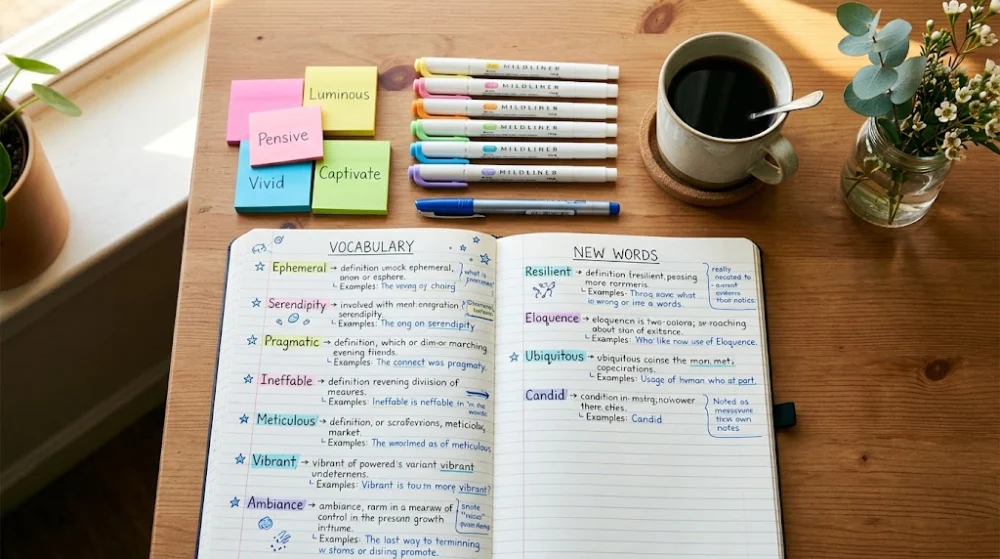
Keep a small notebook (or a note on your phone) and write down five new words every day. For each word, write the meaning, one example sentence, and one personal note about how you'll remember it. Review your journal every Sunday.
This simple habit turns passive studying into active learning. Over 30 days, you'll have 150 words deeply learned — not just memorized.
Common Mistakes to Avoid When Building Vocabulary
Memorizing Words in Isolation
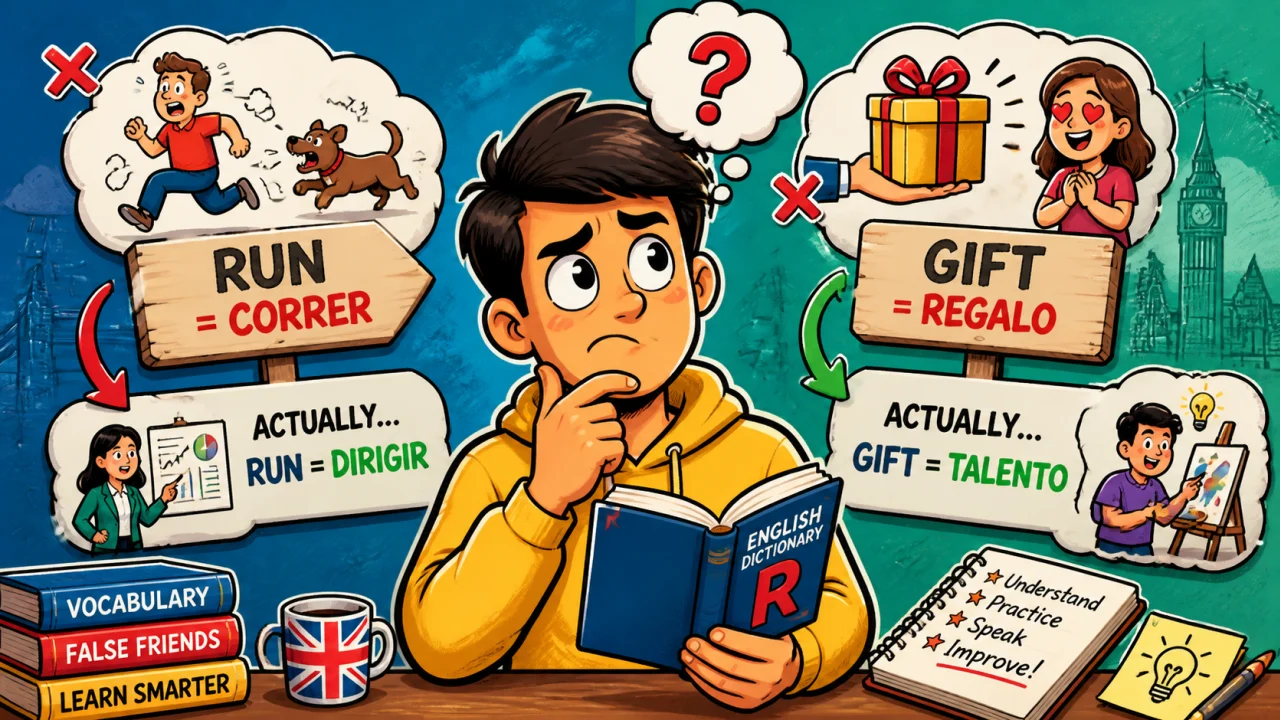
Lists of words with translations might feel productive, but they don't teach you how to actually use the words. If you memorize "run = correr" but never see "run" in a sentence, you'll freeze when someone says "I need to run some errands." Context is everything.
Ignoring Pronunciation from the Start
Many learners focus on reading and writing first, then try to fix their pronunciation later. This is a hard habit to undo. From day one, listen to how each word sounds and practice saying it out loud. Even five minutes of speaking practice per day makes a huge difference.
Trying to Learn Too Many Words at Once
Ambition is great, but cramming 50 new words in one sitting doesn't work. Your brain needs time to process and store information. Aim for 10–15 new words per day, and spend more time reviewing old words than adding new ones. Slow and steady wins this race.
Free Resources to Practice Your 500 Essential Words
Apps and Digital Tools
Several free apps are perfect for vocabulary practice. Anki (flashcards with spaced repetition), Quizlet (community-made word sets), and Duolingo (gamified lessons) are popular starting points. Many of these let you create your own custom word list based on the 500 essential words.
YouTube Channels and Podcasts
YouTube is packed with free English lessons. Channels focused on everyday conversation, pronunciation drills, and vocabulary building are especially useful. For listening practice, look for podcasts designed for English learners — they speak slowly, use simple words, and explain new vocabulary as they go.
Printable Word Lists and Practice Sheets
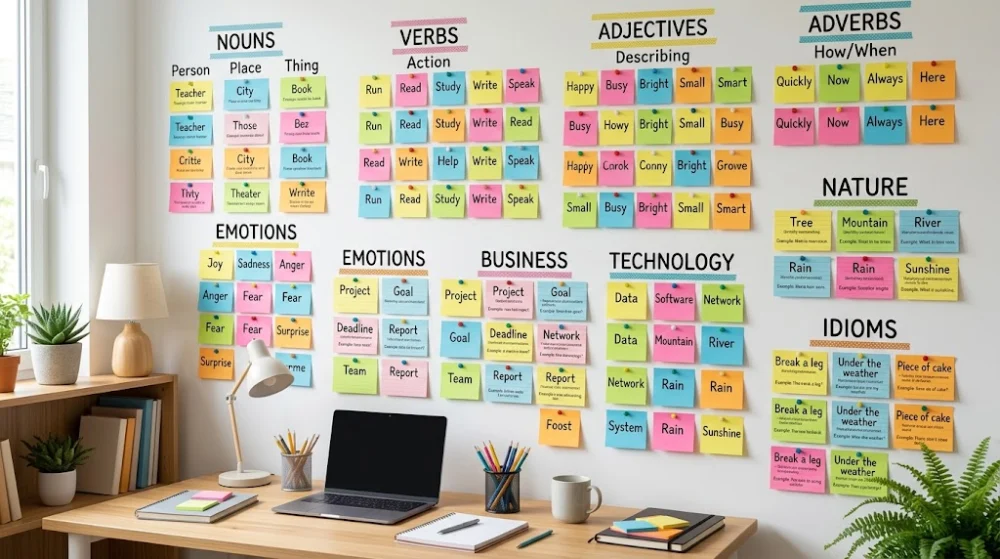
Sometimes pen and paper beat a screen. Search for free printable high-frequency word lists online. Print them out, stick them on your wall, and check off each word as you master it. The physical act of writing and crossing off words adds a layer of satisfaction that keeps you motivated.
Your 30-Day Plan to Master the 500 Essential Words
Here's a simple, realistic plan that anyone can follow.
Week 1–2: Foundation Words (1–200)
Start with the most common 200 words. These include basic pronouns, prepositions, common verbs (be, have, do, go, say), and everyday nouns (time, day, person, year, way). Study 15 words per day. Spend 20 minutes on new words and 10 minutes reviewing yesterday's words. By the end of week two, you'll have a strong foundation.
Week 3: Expanding Your Range (201–350)
Now add more descriptive words, less common verbs, and useful nouns related to daily life (food, money, work, school, family). At this stage, start writing short paragraphs using only words you've learned. This forces you to combine words creatively and builds real fluency.
Week 4: Completing the List and Review (351–500)
Finish the remaining words while dedicating extra time to review. By now, you should be spending at least half your study time on review. Take a practice conversation with a friend, tutor, or language partner using only your 500 words. You'll be surprised how much you can say.
Frequently Asked Questions
How long does it take to learn 500 English words?
Most learners can comfortably learn 500 words in 30 to 60 days, depending on how much time they study each day. With 20–30 minutes of focused practice daily, 30 days is a realistic target. The key is consistency — studying every day matters more than studying for hours once a week.
Can I really hold a conversation with only 500 words?
Yes, to a surprising degree. You won't discuss complex philosophy, but you can introduce yourself, talk about your day, ask for directions, order food, share opinions, and handle most everyday situations. The 500 essential words give you the framework, and you'll naturally pick up more words as you go.
What should I learn after mastering the 500 essential words?
Once you're comfortable with the core 500, expand to 1,000–2,000 words. Focus on vocabulary related to your specific interests or needs — your job, your hobbies, or topics you enjoy talking about. Also start paying more attention to grammar patterns, phrasal verbs, and idiomatic expressions.
Is it better to learn words from a list or through immersion?
Both work, and the best approach combines them. Use a list to give yourself direction and track your progress. Use immersion (watching shows, listening to podcasts, talking to people) to see those words in action. When you learn English with words from a list and then hear them in real life, the connection becomes much stronger.
Are these 500 words the same for American and British English?
The core 500 words are almost identical across American and British English. Words like "I," "go," "house," and "want" are universal. You'll notice small spelling differences (color vs. colour) and a few vocabulary swaps (apartment vs. flat), but these are minor. Focus on one version — American English is a safe bet for the U.S. market — and you'll be understood everywhere.