
Ever wondered how to actually start speaking English confidently, especially after years of learning but little real-world practice? You're not alone. Many English learners worldwide hit a wall when it comes to fluency. This guide introduces a straightforward, 5-step roadmap designed for anyone to follow without getting bogged down or giving up. Forget complicated jargon; we'll walk through each step together, just like a friend showing you the ropes.
Key Takeaways: What You'll Learn in This Article
- The real reasons many learners struggle to speak English and how to overcome them.
- A practical 5-step learning roadmap you can follow without breaking the bank.
- How to build a sustainable 30-minute daily routine that actually sticks.
- Realistic timelines for progressing from beginner to conversational and business-level English.
Why Do Many People Struggle to Speak English Fluently?
The Gap in Traditional Language Education
In many traditional educational systems, English classes often prioritize reading comprehension, grammar rules, and written exercises. We spend years memorizing vocabulary and acing tests, but rarely get the chance to actually speak the language. It's not your fault if you feel like your "speaking muscles" haven't been trained; it's often a systemic issue.
3 Common Learning Patterns That Lead to Frustration
Learners who give up often share common habits:
- The Textbook Hoarder: You keep buying new apps or textbooks, convinced the next one holds the secret, but never finish any of them.
- The Perfectionist Paralysis: You're afraid of making mistakes, so you don't speak up, and time just slips away.
- The Ambiguous Goal-Setter: Your goal is simply "to be fluent," which is too vague. Without a clear destination, it's hard to stay motivated.
If any of these sound familiar, don't worry. The steps we're about to cover will help you tackle all three.
Essential Mindset for English Fluency
Why Ditching "Perfect English" Accelerates Progress
One of the most liberating steps to speaking English is giving yourself permission for it not to be perfect. Did you know that only about 20-25% of English speakers worldwide are native speakers? The vast majority, 75%, use English as a second or foreign language. This means accents are normal, and a few grammatical slips are perfectly fine, as long as you're understood. Think about all the different accents you hear on TV or online – they're all valid!
Goal-Setting Tips for Sustainable Learning
Successful learners set small, concrete goals. Instead of "I want to be fluent," aim for something like "I want to confidently order food on my trip to London in six months," or "I want to introduce myself in English for one minute without hesitation within three months." Your brain thrives on clear targets, not vague aspirations.
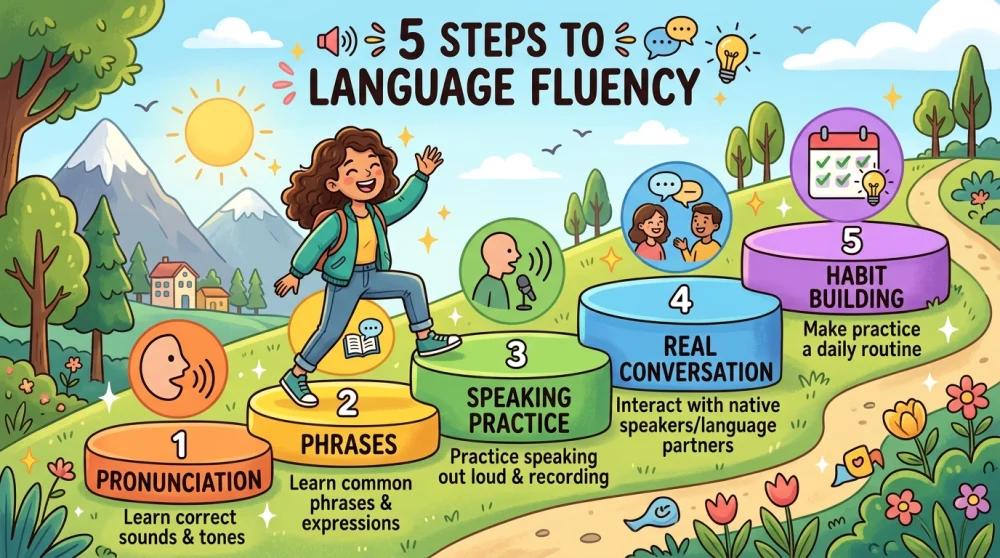
[Step 1] Build Your Foundation in Pronunciation and Listening
Master Phonics and Connected Speech Basics
Phonics teaches you the true sounds of English letters and letter combinations. For instance, the letter 'A' isn't always "ay" but can be "ah" (as in "cat") or "eh" (as in "apple"). Learning these foundational sounds will help you read unfamiliar words and dramatically improve your listening comprehension. A quick YouTube search for "English phonics for beginners" will bring up tons of free resources.
Also, native speakers often blend words together. Understanding common connected speech patterns – like "want to" becoming "wanna" or "going to" becoming "gonna" – will significantly increase how much you can understand when listening.
Make Shadowing a Daily Habit
Shadowing is a powerful practice where you listen to English audio and speak along with it, mimicking the speaker's pronunciation, intonation, and rhythm. It's simple: pick a short audio clip (30 seconds to 1 minute) with subtitles. Play the audio and speak the words a half-second behind the speaker. Don't worry if you sound awkward at first! Just 10 minutes a day, repeating the same material for three days, will get your mouth used to the movements.
[Step 2] Input Usable Phrases in "Chunks"
Why Chunking is More Effective Than Single Words
To speak English fluently, learning words in "chunks" (common phrases or collocations) is far more efficient than memorizing individual words. For example, simply knowing "make" isn't enough to form sentences. But learning "make sense," "make sure," or "make a decision" allows you to use them directly in conversation.
High-Frequency Everyday English Phrases
The phrases you actually use in daily conversation are surprisingly limited. "Could you say that again?", "That makes sense.", "I'll think about it.", "No worries!", "How's it going?" – learning just 20-30 of these short phrases will enable you to handle basic interactions with ease.
[Step 3] Create Your "Speaking Circuit" with Solo Practice
The Right Way to Do Self-Talk Training
Before engaging with others, get your mouth moving with "solo English practice." It's easy: Narrate your surroundings in English. While making coffee, say, "I'm making coffee now." On your commute, "The train is crowded today." If you can't speak aloud, just think the sentences in your head. This builds your speaking confidence and reflexes.
Self-Check with Phone Recording
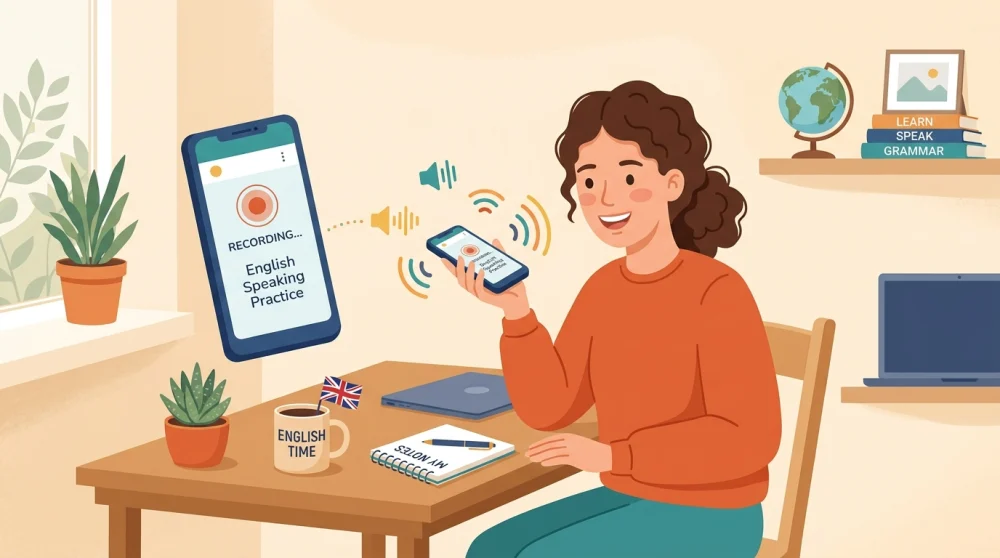
Use your smartphone's voice recorder to listen back to yourself. You'll be amazed at how quickly you start noticing your own pronunciation or grammatical quirks. Being able to identify, "Ah, that pronunciation was a bit off," is a huge step forward! Recording the same phrases weekly and comparing them can visibly track your progress and boost motivation.
[Step 4] Find Low-Cost Practice Opportunities
Maximizing Online English Lessons
Online English lessons are incredibly cost-effective, often just a few dollars per session, and provide invaluable real-world practice. However, going into a lesson unprepared can lead to "the silent 25 minutes." Before each session, jot down 3 topics you want to discuss and 2-3 new phrases you want to try out. This simple preparation will dramatically improve the quality of your lessons.
Choosing and Using Free Language Exchange Apps
If you're on a tight budget, language exchange apps are a fantastic option. You connect with native English speakers who want to learn your language, and you teach each other – no cost involved! When choosing an app, prioritize those with voice call features over just text chat. Always be mindful of your personal information and online safety.
[Step 5] Systematize Your Learning to Avoid Frustration
Your 30-Minute Daily Learning Routine Template
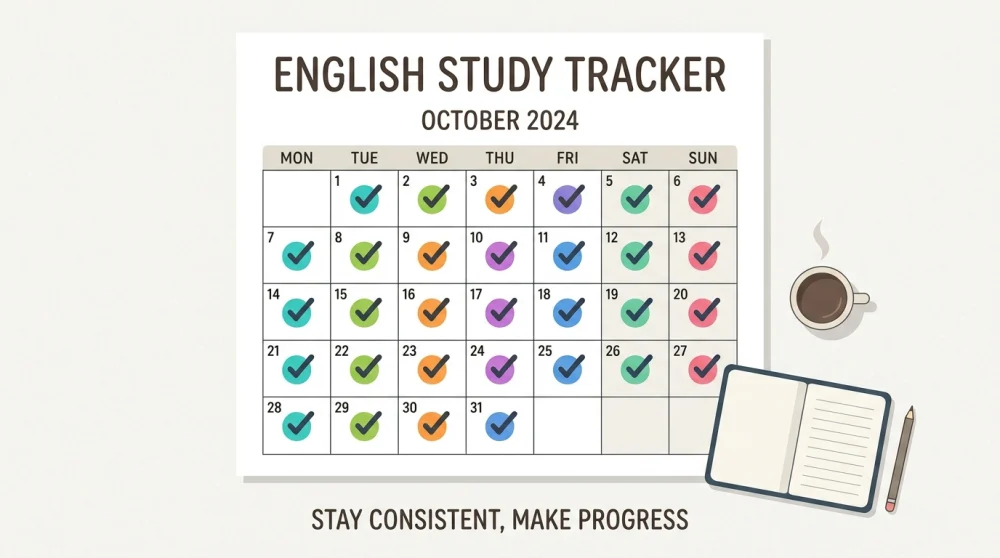
The key to speaking English fluently is to make your daily routine so automatic you don't even have to think about it. Here's a recommended 30-minute menu:
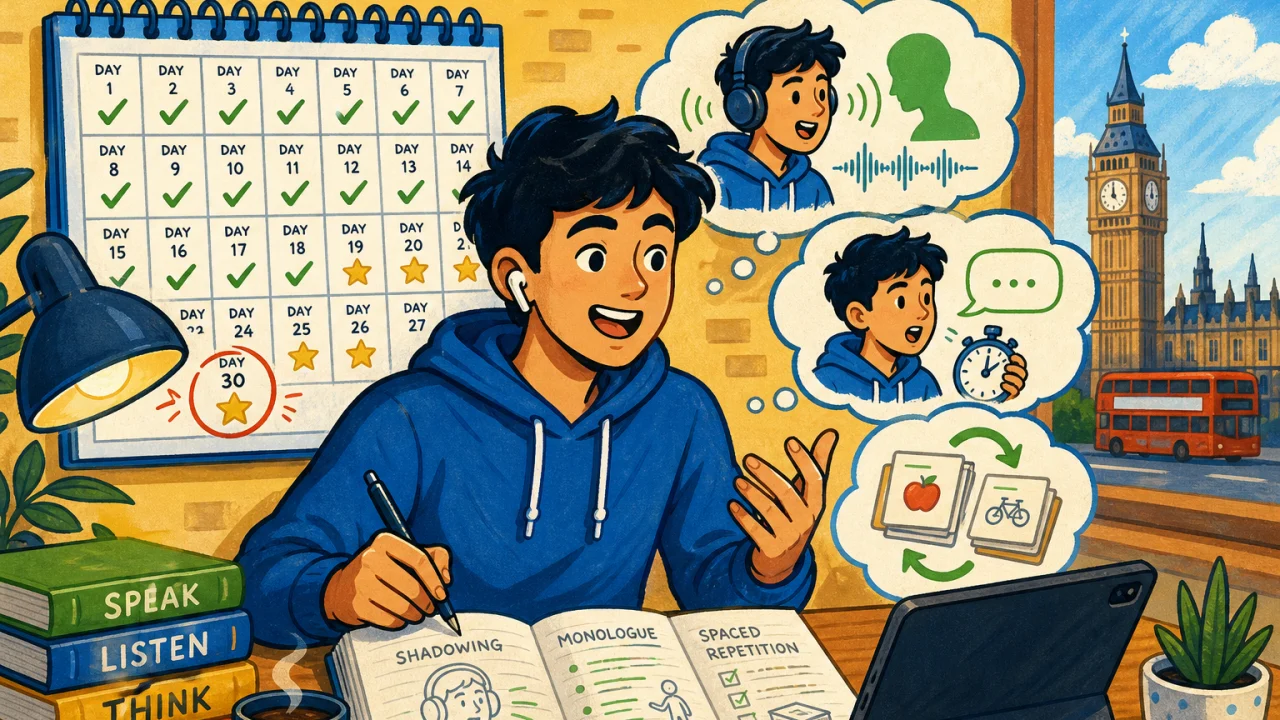
- First 10 minutes: Shadowing practice.
- Next 10 minutes: Reading chunk phrases aloud.
- Final 10 minutes: Solo English practice, describing your day.
Simply doing this much every day will help English flow more naturally from your mouth within three months.
Building "Habit Triggers" to Stay Consistent
"Only studying when you feel motivated" is a recipe for inconsistency. Instead, use "habit triggers." Link your English practice to actions you already do daily. For example, "After I brush my teeth, I'll do 10 minutes of shadowing," or "When I get on the bus, I'll review my chunk phrases." This automates your learning without relying on willpower.
Timeline and Estimated Study Hours for Fluency
Here's a rough guide for how long it might take, assuming consistent 30-minute daily practice:
Level-Based Roadmap: Zero → Conversational → Business English
- From zero to basic self-introduction: Approximately 1-2 months.
- To comfortable everyday conversation (e.g., traveling without problems): Around 6 months.
- To expressing opinions confidently in a professional setting (business English): Roughly 1.5 to 2 years.
The most crucial element is to consistently make time to actively speak. Daily 30-minute sessions are far more effective than cramming for 3 hours only on weekends.
Frequently Asked Questions (FAQ)
Q1. How much should I study each day to speak English fluently?
Aim for a minimum of 15-30 minutes daily. Even short, consistent practice helps your brain recognize English as a language to use. Daily efforts are vastly more effective than infrequent, long sessions.
Q2. Can adults learn to speak English fluently?
Absolutely! Adults have the advantage of being able to logically understand grammar and linguistic structures. While pronunciation might take a bit more conscious effort than for children, it can be thoroughly improved with practices like phonics and shadowing.
Q3. Can I become fluent in English without studying abroad?
Yes, definitely. With online English lessons, language exchange apps, YouTube, podcasts, and other digital resources, you have abundant opportunities to immerse yourself in English from anywhere in the world. Studying abroad is a wonderful experience, but it's not a prerequisite for fluency.
Q4. Is a language school or self-study more effective?
Both have their merits. Schools offer structure and direct feedback, which can be motivating. Self-study allows you to learn at your own pace and is often more budget-friendly. The ideal approach for many is a hybrid: build a solid foundation through self-study, then supplement with 1-2 online lessons per week for consistent output practice.
Q5. What's the estimated cost to become fluent in English?
You can start with free resources and spend as little as a few dollars a month. YouTube and podcasts are free. Online English lessons typically range from $60-100 per month. High-cost textbooks or exclusive schools are not necessary to achieve fluency.
Summary: Your First Step Starts Today
Speaking English fluently doesn't require special talent or a massive investment. All it takes is following the right steps and consistently practicing a little bit each day. From the 5 steps outlined here, why not start with Step 1: building your pronunciation foundation? Just watching one phonics video today can set your English learning journey in motion.