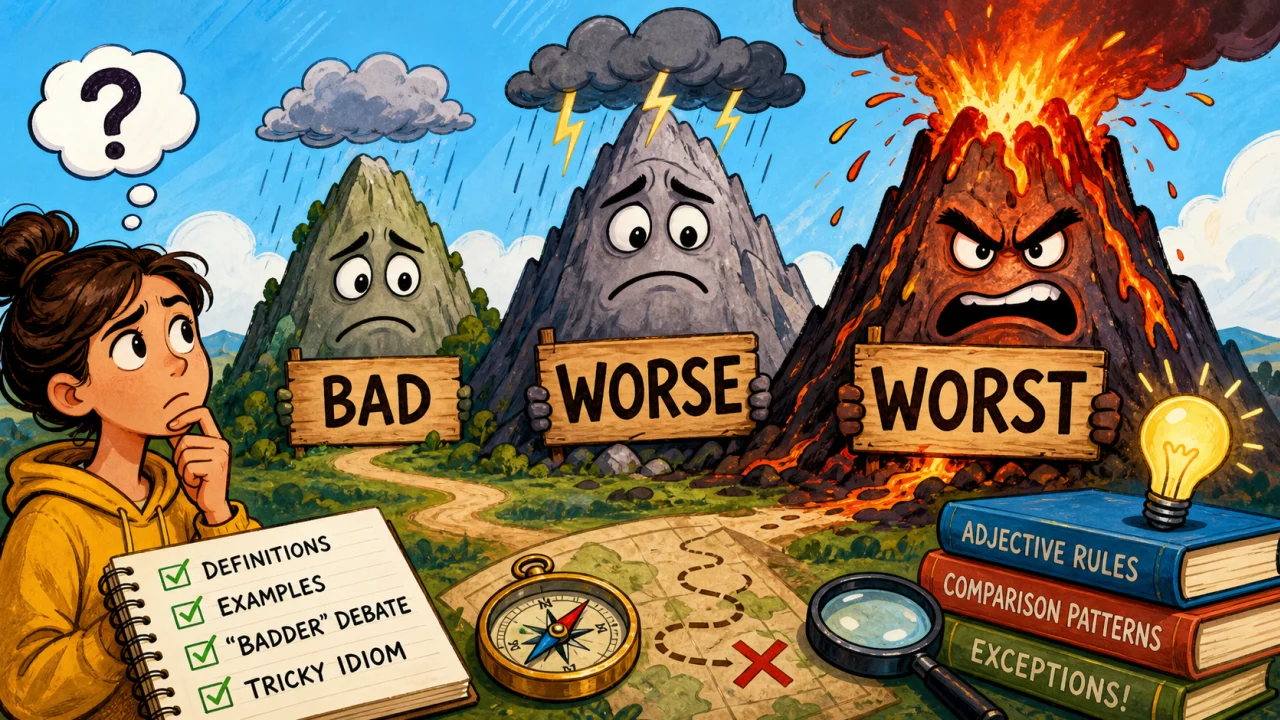
You know the rule: add -er for comparing two things, add -est for the most extreme. Tall, taller, tallest. Smart, smarter, smartest. So why on earth does "bad" turn into "worse" and "worst" instead of "badder" and "baddest"? The bad worst worst chain is one of the most stubborn irregularities in English, and once you understand where it comes from, you'll never mix them up again.
Why Bad Doesn't Follow the Normal Rules
What Regular Adjectives Do (And Why Bad Refuses)
Most English adjectives play nice. You take the base word, tack on a suffix, and you're done. Cold becomes colder becomes coldest. Cheap becomes cheaper becomes cheapest. There are roughly 6 common irregular adjective sets in English, and bad → worse → worst is the one that trips up the most people — native speakers included.
The reason "bad" refuses to cooperate is simple but strange: "worse" and "worst" didn't originally come from "bad" at all. They started life attached to a completely different word.
The Old English and Old Norse Roots Behind the Split
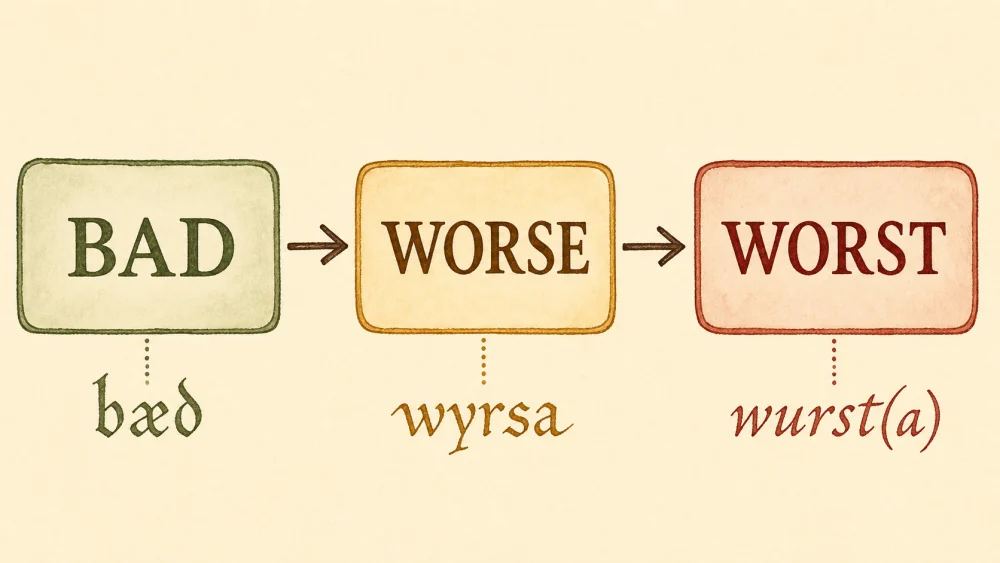
Here's where things get interesting. In Old English, the word for bad was "yfel" (which eventually became "evil"). The comparative and superlative forms "worse" and "worst" trace back to a different Old English root — "wiersa" and "wierrest" — which were linked to the concept of confusion or entanglement, not simply "more bad."
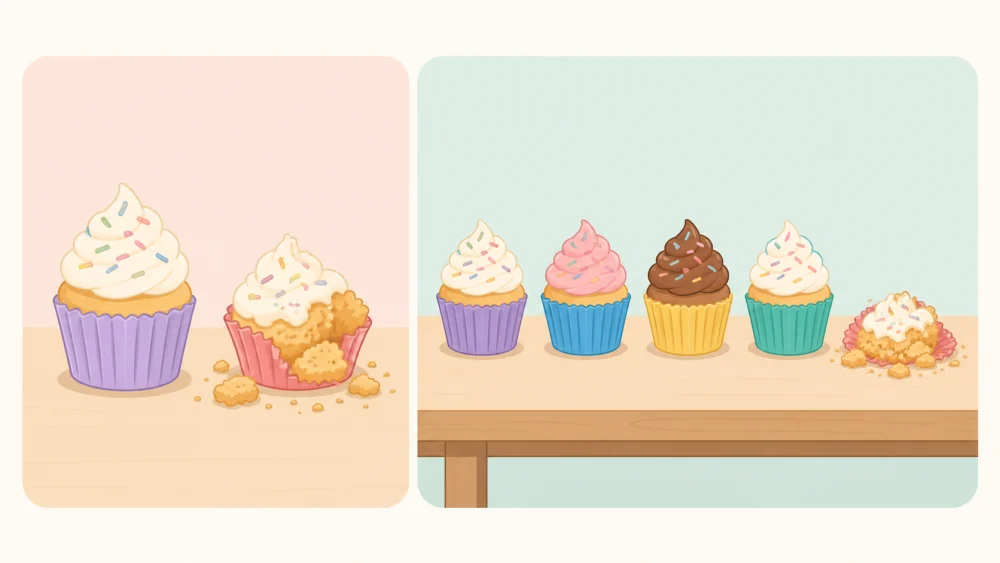
Over centuries, "bad" replaced "yfel" as the everyday word for something unpleasant or low-quality. But "worse" and "worst" had already claimed the comparative and superlative slots. So English did what English does best: it smashed two unrelated word families together and moved on. That's why there's no letter overlap between "bad" and "worse." They're strangers who ended up sharing a house.
This same pattern happened with "good," by the way. "Better" and "best" don't come from "good" either — they trace back to an Old English root meaning "to improve" or "to remedy." English has exactly 2 adjective chains where every form comes from a different root word: good-better-best and bad-worse-worst.
Bad, Worse, Worst — What Each Word Actually Means
Bad: The Base Form You Already Know
"Bad" is the plain adjective. No comparison involved. The soup is bad. The weather is bad. It describes a single thing on its own terms.
You can also use it as a noun ("take the bad with the good") or an adverb in informal speech ("she wanted it bad"), but for the worse-vs-worst question, we're focused on the adjective.
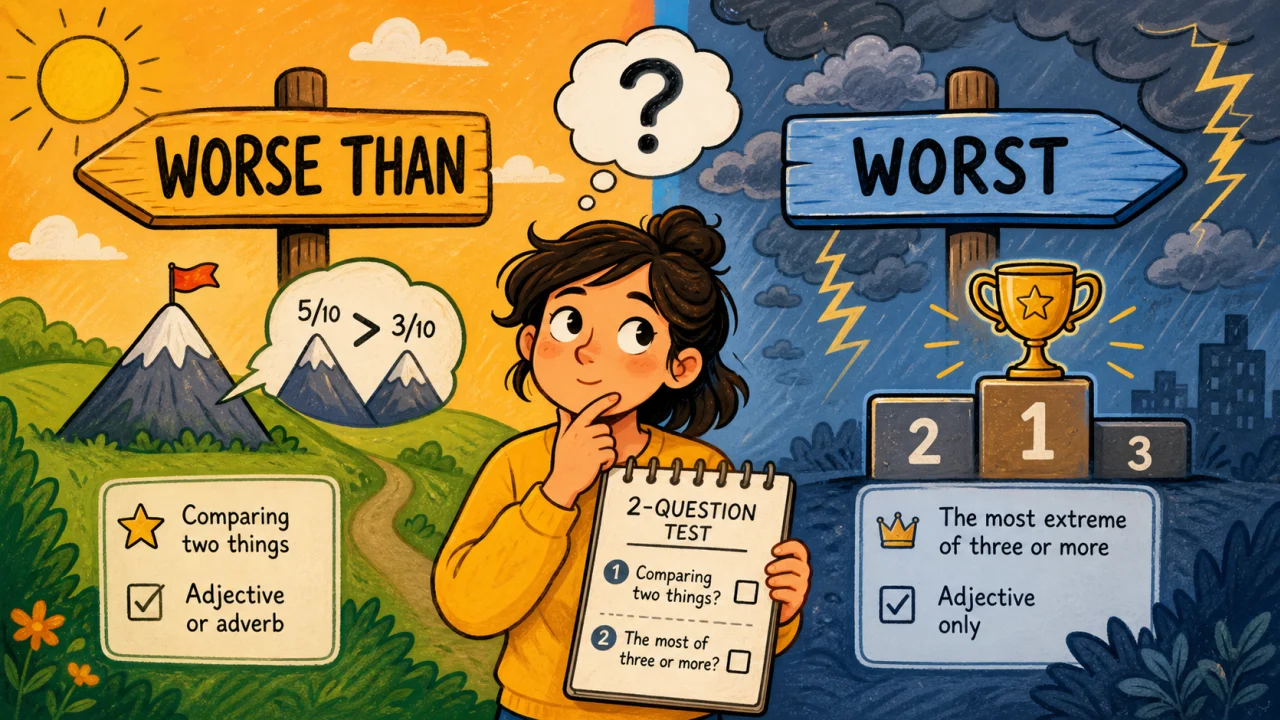
Worse: Comparing Exactly 2 Things
"Worse" is the comparative form. It means "more bad," and it always needs a comparison partner — either stated or implied. You need at least 2 things to use it correctly.
Think of it this way: worse draws a line between A and B.
- Monday's test was bad, but Tuesday's was worse.
- His bark is worse than his bite.
- I felt worse yesterday than I do today.
Notice the word "than" keeps showing up? That's your clue. If you can fit "than" into the sentence (even silently), you probably want "worse."
Worst: The Most Bad Out of 3 or More
"Worst" is the superlative form. It means there's nowhere left to go — you've hit the bottom. It works when you're comparing 3 or more things, or when you're talking about the extreme end of all possibilities.
- This is the worst pizza I've ever eaten.
- She brings out the worst in him.
- That was the worst call the referee made all season.
"Worst" doesn't need a direct comparison partner the way "worse" does. It stands alone at the bottom of the pile.
How to Use Worse vs. Worst in a Sentence
Worse Always Needs a Comparison Partner
Whenever you write "worse," ask yourself: worse than what? If you can't answer that question — even vaguely — you might need "worst" instead.
"I'm getting worse" works because the comparison is implied: worse than before. "This is the worse movie" doesn't work unless you're comparing it to exactly one other movie. If you're comparing it to every movie you've seen, you need "worst."
Worst Stands Alone at the Bottom
"Worst" usually pairs with "the." That's another quick clue. "The worst day," "the worst idea," "my worst fear." You're pointing at one item and saying it sits below everything else in the group.
Can you ever use "worst" without "the"? Sure — as a noun. "Prepare for worst" sounds incomplete, but "expect the worst" or "the worst is over" both work fine.
Quick Test: Can You Swap in "More Bad" or "Most Bad"?
Here's a trick that works every time. Replace "worse" with "more bad" and "worst" with "most bad" in your sentence. If "more bad" sounds right, use "worse." If "most bad" sounds right, use "worst." Nobody actually says "more bad" or "most bad" in real life, but they map perfectly to the correct forms.
- "This is more bad than yesterday" → This is worse than yesterday. Correct.
- "This is the most bad day ever" → This is the worst day ever. Correct.
Wait — Is "Badder" a Real Word?
Why Kids Say It and Why Slang Keeps It Alive
Every English-speaking toddler goes through a phase of saying "badder" and "baddest." That's actually a sign their brain is learning the rules correctly — they just haven't memorized the exceptions yet. Linguists call this "overgeneralization," and it shows up in children around age 3-4.
Outside of childhood, "baddest" lives on in slang and music. When someone calls a person "the baddest," they usually mean the coolest or toughest — flipping "bad" into a compliment. That usage has been part of African-American Vernacular English for decades and has crossed into mainstream pop culture.
When Standard English Still Says No
In formal writing, on standardized tests, and in professional settings, "badder" and "baddest" aren't accepted as comparative and superlative forms of "bad." If you're writing an essay, a work email, or anything that'll be graded or published, stick with "worse" and "worst." The slang meaning of "baddest" (meaning coolest) is a separate word with a separate purpose — don't confuse the two.
The Idiom Trap: "If Worse Comes to Worst" or "If Worst Comes to Worst"?
How the Phrase Shifted Over Centuries
This one catches even careful writers. The original version of this idiom, dating back several centuries, was "if the worst come to the worst." The logic was circular but clear: if the worst possible situation becomes the actual situation.
Over time, speakers started saying "if worse comes to worst," which actually makes a bit more logical sense — things go from bad (worse) to the absolute bottom (worst). That shift happened gradually, and both versions have coexisted for a long time.
Which Version Editors Prefer Right Now
Both "if worse comes to worst" and "if worst comes to worst" are considered acceptable. But "if worse comes to worst" has become the more common version in American English. Most U.S. style guides won't flag either one as wrong. Pick whichever sounds natural to you and stay consistent.
The version you should avoid? "If worse comes to worse." That one strips out the superlative entirely and loses the meaning of the idiom.
5 Sentences to Practice Right Now (With Answers)
Try picking the right word before checking the answers below.
- I felt ______ yesterday; I think I'm starting to recover.
- I was the ______ shortstop in the history of my Little League team.
- Don't scratch that mosquito bite or you'll make it ______.
- This has to be the ______ vacation we've ever taken.
- I tried to fix the paint smudge but I made it ______ than before.
Answers: 1) worse, 2) worst, 3) worse, 4) worst, 5) worse.
The pattern is consistent: if "than" fits (stated or implied), choose "worse." If "the" fits and you're talking about the extreme, choose "worst."
FAQ
What Are the 3 Degrees of Bad?
The 3 degrees are: bad (positive), worse (comparative), and worst (superlative). They match the same structure as good → better → best, except both chains use completely different root words for each degree.
Can Worse and Worst Be Used as Nouns?
Yes. "Worse" appears as a noun in phrases like "for better or for worse." "Worst" works as a noun in "expect the worst" or "the worst is behind us." Both words function as adjectives, adverbs, and nouns depending on context.
Why Don't We Say "Baddest" in Formal Writing?
Because English already has "worst" filling that role. "Baddest" treats "bad" as a regular adjective and adds the standard -est suffix, but the irregular form "worst" has been the accepted superlative for over a thousand years. In slang, "baddest" means something different — toughest or coolest — which is a separate usage.
Is "More Bad" Ever Correct?
Grammatically, no. "More bad" follows the pattern used for longer adjectives ("more beautiful," "more expensive"), but "bad" is a short, one-syllable word that already has its own comparative form: "worse." You won't find "more bad" in any style guide or grammar reference as a recommended form.