You've been watching English videos for months and you still can't understand a native speaker ordering coffee. The problem isn't effort—it's that most channels english learners stumble onto are either too scripted, too fast, or too boring to stick with. This list sorts nine channels by actual difficulty level so you can start where your ears are right now and move up when you're ready.
Key Takeaways
- Not all English channels suit every level. A channel that's perfect for an intermediate listener will crush a beginner's confidence.
- Passive watching barely moves the needle. Pair channels with shadowing or active replay for real gains.
- Twenty minutes a day, split across three levels, beats a two-hour weekend binge every time.
- Playback speed is an underused tool—slowing down to 0.75x or speeding up to 1.25x can match any channel to your current ability.
How I Picked These 9 Channels English Learners Actually Need
What Makes a Channel Good for Listening Practice
Three things separate a useful channel from background noise. First, the speaker's pace needs to match or slightly stretch your current comprehension—research from Nation and Waring suggests learners should understand roughly 95% of words before real listening gains kick in. Second, the content has to be interesting enough that you'd watch it even without the language goal. Third, the channel should offer subtitles or transcripts you can check after listening, not during.
How This List Is Sorted (Beginner, Intermediate, Advanced)
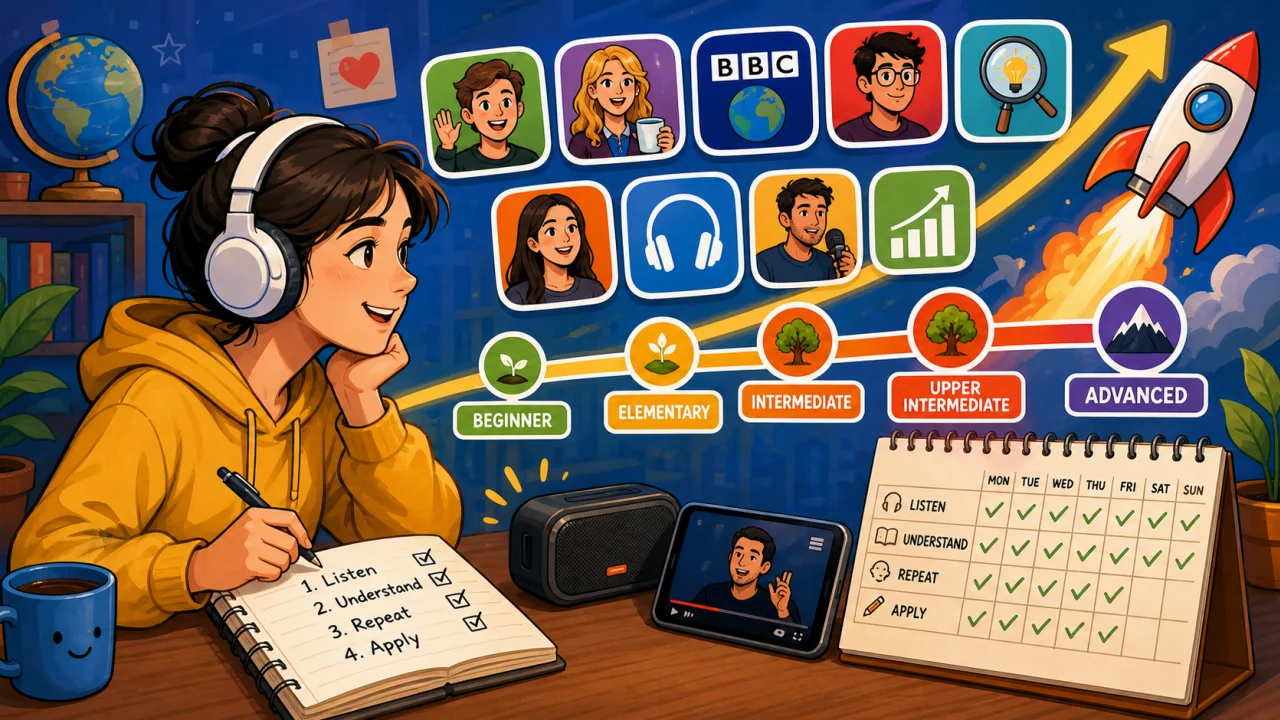
Each tier matches a rough CEFR band. Beginner channels target A1–A2 listeners: slow speech, simple vocabulary, lots of visual support. Intermediate covers B1–B2: natural speed, some idioms, varied topics. Advanced means C1 and above: fast, unscripted, full of slang and overlapping speakers. Pick the tier where you understand about 70% on first listen, then work up.
Beginner Channels English Learners Can Follow from Day One
Channel 1 – Slow, Clear Speech with Visual Context
Look for channels where the host speaks at roughly 110–120 words per minute (normal American English conversation hits about 150 wpm). The best beginner channels pair every sentence with on-screen images, drawings, or real objects. Think of a cooking channel where someone names each ingredient while holding it up. You see it, you hear it, the word sticks.
Channel 2 – Short Daily Lessons Under 10 Minutes
Attention spans are short when everything sounds like mush. Channels that cap episodes at 5–8 minutes let you replay the whole thing twice in under 20 minutes. That repetition matters more than length. A single 6-minute video watched three times will teach you more than a 45-minute lecture you zone out of halfway through.
Channel 3 – Story-Based Listening You Won't Want to Pause
Stories beat textbook dialogues because your brain actually wants to know what happens next. Channels that tell short tales—fairy tales, personal anecdotes, even simplified news stories—keep you listening through unfamiliar words instead of hitting pause. That tolerance for ambiguity is a skill you're training alongside vocabulary.
Intermediate Channels English Students Use to Break the Plateau
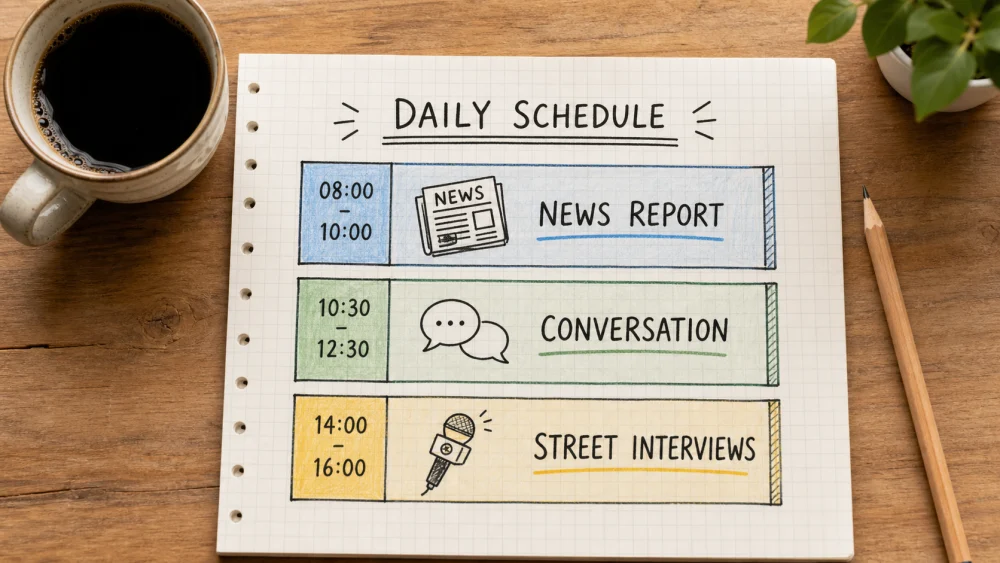
Channel 4 – Real Conversations at Natural Speed
This is where you graduate from classroom English to the real thing. Find two-person conversation channels where hosts don't slow down for learners. You'll miss chunks at first. That's the point. Your ear needs exposure to connected speech—the way Americans blend "going to" into "gonna" or drop the T in "internet."
Channel 5 – News English with Subtitles You Can Toggle
News channels give you something most casual content doesn't: formal register. You hear complete sentences, precise vocabulary, and clear enunciation. The trick is toggling subtitles off for your first watch, then turning them on for a second pass to catch what you missed. BBC Learning English and VOA Learning English both offer this, but any news channel with accurate closed captions works.
Channel 6 – Interview-Style Shows with Different Accents
Here's an angle most listicles skip: accent variety matters way more than people think. If you only train your ear on one American accent, you'll freeze the first time you hear someone from London, Sydney, or Mumbai. Interview channels naturally expose you to guests with different backgrounds. That variety builds the flexible listening skill you actually need in the real world, especially in diverse U.S. cities where your coworkers might speak English with five different accents.
Advanced Channels English Enthusiasts Binge Without Subtitles
Channel 7 – Fast-Paced Commentary and Debate
Debate and commentary channels throw speed, interruptions, and opinion language at you all at once. Speakers hit 170–190 wpm easily. If you can follow 80% of a heated discussion without subtitles, your listening is genuinely strong. These channels also teach you how disagreement sounds in English—useful if you work in any kind of team environment.
Channel 8 – Podcast-Style Deep Dives on Everyday Topics
Long-form podcast channels (30–60 minutes per episode) train sustained attention. That's a different skill from understanding a 5-minute clip. You learn to hold context across topic shifts, track multiple speakers, and recover when you lose the thread for 30 seconds. Pick topics you already know well so background knowledge fills gaps your ears miss.
Channel 9 – Unscripted Street Interviews and Slang
Street interview channels are the final boss. Audio quality varies. People mumble, laugh mid-sentence, use slang you won't find in any textbook, and talk over each other. But that's exactly how English sounds at a grocery store in Los Angeles or a bar in Chicago. If you can follow these, you can follow anything.
The Passive Watching Trap – Why You're Not Improving Even with Good Channels
Shadowing vs. Just Listening – What the Research Says
Watching without engaging is like reading a cookbook without ever turning on the stove. A study published in the Journal of Second Language Pronunciation found that learners who practiced shadowing—repeating what they heard in real time, about half a second behind the speaker—improved listening comprehension 23% more than a control group over 12 weeks. Shadowing forces your brain to process sounds actively instead of letting them wash over you.
How Playback Speed Settings Change Everything
Most people don't touch the speed dial. That's a mistake. Dropping a challenging channel to 0.75x speed gives your brain extra processing time without changing the content. Once you're comfortable, bump it back to 1x. Want a real stretch? Watch beginner content at 1.25x or 1.5x. Your ear adapts to the faster rhythm, and normal speed starts to feel almost slow. YouTube, podcast apps, and most video platforms all offer this setting—use it.
How to Build a Simple Daily Routine Around These Channels
The 20-Minute Stack – One Channel from Each Level
Spend 5 minutes on a beginner channel (shadow along), 8 minutes on an intermediate channel (subtitles off, then on), and 7 minutes on an advanced channel (just listen and survive). Total: 20 minutes. Do this before breakfast or during a commute. Consistency at 20 minutes per day beats an irregular 2-hour session every Saturday.
Tracking Your Progress Without Overthinking It
Grab a notebook or open a simple spreadsheet. After each session, write down one new phrase you caught and rate your understanding on a 1–5 scale. That's it. Over 30 days, you'll see the numbers creep up. No apps needed, no complicated systems. The act of writing one phrase also doubles as a quick vocabulary review.
Mistakes That Keep Listeners Stuck (and Quick Fixes)
Picking Channels That Are Too Hard Too Soon
Ambition is great. Frustration isn't. If you understand less than 50% on first listen, the channel is too hard right now. Drop down a tier, build confidence, then come back. There's no shame in a channel feeling easy—easy means your brain can actually absorb patterns instead of just panicking.
Ignoring Accents You'll Actually Encounter
If you live in the U.S. or plan to work with American companies, you'll hear Southern drawls, Midwestern flatness, New York speed, and non-native accents from coworkers around the globe. Training on a single "standard" accent is like only practicing tennis serves—you need the full game. Mix at least two accent types into your weekly channel rotation.
FAQ
What are the best channels English beginners should start with?
Start with channels that use slow speech (around 110 words per minute), short episodes under 10 minutes, and strong visual support. Story-based channels also work well because the narrative keeps you listening through unfamiliar words instead of quitting early.
How many hours a day should I watch English channels to improve?
You don't need hours. Twenty minutes of focused, active listening daily produces better results than long passive sessions. Split that time across different difficulty levels so you're building confidence and stretching your skills in the same sitting.
Can I improve my English listening just by watching YouTube channels?
Watching alone isn't enough. You need to engage actively—shadow the speaker, replay tricky sections, and check subtitles after your first listen. Passive viewing feels productive but barely moves comprehension forward compared to active techniques.
Are English channels with subtitles better or worse for learning?
Subtitles help when used correctly. Watch first without them, then replay with subtitles to catch what you missed. Keeping subtitles on the whole time trains your reading, not your listening, so toggle them strategically.
What is the difference between English learning channels and native content channels?
Learning channels use simplified vocabulary, slower pace, and teaching explanations. Native content channels speak at real-world speed with slang, interruptions, and assumed cultural knowledge. Both matter—start with learning channels and gradually shift toward native content as your ear improves.