
想让你的英语听起来更自然、更像一个真正的母语者,而不是一本死板的教科书?那么,你需要掌握英语母语者日常真正使用的地道口语句子。这篇指南为你精心整理了超过150句即学即用的日常英语口语,按真实生活场景分类——从打招呼、点餐到安排周末计划,应有尽有。告别复杂的语法讲解,这里只有你当下最需要的实用句子。
核心要点 (Key Takeaways)
- 母语者在日常对话中,会反复使用一套核心的日常英语口语句子。
- 教科书上的英语往往听起来生硬不自然,而真实的口语更简洁、更随意。
- 按场景(如问候、购物、工作)学习句子,能帮助你在需要时更快地回忆起来。
- 每天练习10-15个新句子,几周内就能显著提升你的口语流利度。
- 将记忆与大声朗读结合起来,效果更佳。
为什么学习日常英语口语至关重要? (Why Learning Daily Use English Sentences Matters)
教科书英语与真实对话的鸿沟 (The Gap Between Textbook English and Real Conversations)
很多英语课本不会告诉你一个秘密:英语母语者的日常交流方式,和教科书上教的往往大相径庭。教科书可能会教你规规矩矩地说:“I am doing well, thank you. And yourself?” (我很好,谢谢。你呢?)但在实际生活中,大多数英语母语者只会简单地回应:“Good, you?” (挺好的,你呢?)或者“Not bad.” (还不错。)
这种教科书英语与真实口语之间的巨大差距,正是导致许多学习者在实际对话中“卡壳”的主要原因。他们可能熟知语法规则,却不知道人们在真实语境中到底怎么说。练习真实的口语句子,正是弥补这一鸿沟的关键。
基于句子的学习如何加速流利度提升 (How Sentence-Based Learning Accelerates Fluency)
当你学习的是完整的句子,而非孤立的单词时,你的大脑会开始识别语言模式。你不再逐字翻译,而是开始以“语块”为单位思考。这正是母语者说话的方式——他们使用成千上万次预先构建好的语块。你吸收的语块越多,你的英语听起来就越快、越自然。

日常问候和寒暄口语句子 (Daily Use English Sentences for Greetings and Small Talk)
每天都能听到的随意问候语 (Casual Greetings You'll Hear Every Day)
- Hey, what's up? - 嘿,最近怎么样?/ 有什么新鲜事吗?
- How's it going? - 最近好吗?/ 怎么样了?
- Good morning! How are you? - 早上好!你好吗?
- Long time no see! - 好久不见!
- What have you been up to? - 你最近都在忙些什么?
- Hey there! - 嗨! (随意的打招呼)
- How's your day going? - 你今天过得怎么样?
- What's new? - 有什么新鲜事吗?
礼貌地开启和结束对话 (Polite Ways to Start and End a Conversation)
- It was really nice talking to you. - 很高兴和你聊天。
- I should get going, but let's catch up soon. - 我该走了,但我们找时间再聚。
- Excuse me, do you have a minute? - 打扰一下,你现在方便吗?/ 有空吗?
- Sorry, I didn't catch your name. - 抱歉,我没听清你的名字。
- Take care! See you around. - 保重!回头见。
- Have a great rest of your day. - 祝你接下来的一天愉快。
日常提问的英语句子 (Everyday English Sentences for Asking Questions)
日常情境中的简单问题 (Simple Questions for Everyday Situations)
- What time is it? - 现在几点了?
- Where is the nearest bathroom? - 最近的洗手间在哪里?
- How much does this cost? - 这个多少钱?
- Do you know where I can find a pharmacy? - 你知道哪里有药店吗?
- Is this seat taken? - 这个座位有人坐吗?
- What does that mean? - 那是什么意思?
- Can you say that again? - 你能再说一遍吗?
礼貌地寻求帮助或信息 (Polite Ways to Ask for Help or Information)
- Would you mind helping me with this? - 你介意帮我一下这个吗?
- Could you please repeat that? - 请你重复一遍好吗?
- I'm sorry to bother you, but could you help me? - 抱歉打扰你,你能帮我一下吗?
- Do you happen to know the way to the station? - 你知道去车站怎么走吗?
- Is it okay if I ask you a quick question? - 我可以问你一个简单的问题吗?
- I was wondering if you could point me in the right direction. - 我想知道你是否能给我指个路。
购物和用餐的日常英语句子 (Everyday Sentences for Shopping and Dining)
在商店:购物和闲逛用语 (At the Store: Phrases for Buying and Browsing)
- I'm just looking, thanks. - 我只是随便看看,谢谢。
- Do you have this in a different size? - 这个有别的尺码吗?
- How much is this? - 这个多少钱?
- Can I try this on? - 我可以试穿一下吗?
- Do you accept credit cards? - 你们接受信用卡吗?
- I'll take this one, please. - 我要这个,谢谢。
- Is this on sale? - 这个在打折吗?
- Where can I find the fitting room? - 试衣间在哪里?
在餐厅:点餐、请求和结账 (At a Restaurant: Ordering, Requesting, and Paying)
- Can I see the menu, please? - 我能看一下菜单吗?
- I'll have the grilled chicken, please. - 我要烤鸡,谢谢。
- Could I get a glass of water? - 我能要一杯水吗?
- Is there anything you recommend? - 你有什么推荐的吗?
- Check, please. - 买单,谢谢。
- Can we split the bill? - 我们可以AA制吗?/ 分开付账吗?
- I'm allergic to nuts — does this have any? - 我对坚果过敏——这个里面有坚果吗?
- Could I get this to go? - 我可以打包带走吗?

工作和学习的必备英语句子 (Essential English Sentences for Work and School)
办公室里的专业用语 (Professional Phrases for the Office)
- I'll get back to you on that. - 我会就此事回复你。
- Let me check my schedule. - 我查一下我的日程表。
- Could we set up a meeting for this week? - 我们这周能安排一个会议吗?
- I just wanted to follow up on our last conversation. - 我只是想跟进一下我们上次的谈话。
- I'll send you an email with the details. - 我会把详细信息发邮件给你。
- That sounds like a great idea. - 这听起来是个好主意。
- Let me know if you need anything from my end. - 如果我这边有什么需要,请告诉我。
- I appreciate your help with this. - 我很感谢你在这件事上的帮助。
课堂和学习相关句子 (Classroom and Study-Related Sentences)
- Could you explain that one more time? - 你能再解释一遍吗?
- I didn't quite understand the last part. - 我没太明白最后那部分。
- When is the assignment due? - 作业什么时候截止?
- Can I borrow your notes? - 我可以借你的笔记吗?
- What chapters are on the test? - 考试会考哪些章节?
- Do we have homework tonight? - 我们今晚有作业吗?
- I need to study for the exam this weekend. - 我这个周末需要为考试复习。
表达观点和情感的英语句子 (English Sentences for Expressing Opinions and Emotions)
同意、不同意和表达你的看法 (Agreeing, Disagreeing, and Giving Your View)
- I totally agree with you. - 我完全同意你的看法。
- I see your point, but I think differently. - 我明白你的观点,但我有不同看法。
- That's a good point. - 这话说得很有道理。
- I'm not so sure about that. - 我对此不太确定。
- In my opinion, it depends on the situation. - 在我看来,这要视情况而定。
- I feel the same way. - 我也有同感。
- Honestly, I think you're right. - 老实说,我觉得你是对的。
日常英语中谈论感受 (Talking About Feelings in Everyday English)
- I'm so happy for you! - 我真为你高兴!
- That really made my day. - 那真是让我今天心情大好。
- I'm a little stressed out right now. - 我现在有点压力大。
- I'm not feeling great today. - 我今天感觉不太舒服。
- That's so frustrating. - 那真是太令人沮丧了。
- I can't wait! - 我等不及了!
- I'm kind of nervous about it. - 我对此有点紧张。
制定计划和社交的句子 (Sentences for Making Plans and Socializing)
邀请某人和安排 (Inviting Someone and Making Arrangements)
- Do you want to grab coffee sometime? - 你想找个时间喝杯咖啡吗?
- Are you free this weekend? - 你这个周末有空吗?
- We should hang out soon. - 我们应该找时间聚聚。
- Let's meet up after work. - 我们下班后见面吧。
- Want to come over for dinner? - 想过来吃晚饭吗?
- I was thinking we could check out that new place. - 我在想我们可以去看看那个新地方。
接受、拒绝和重新安排 (Accepting, Declining, and Rescheduling)
- Sounds great! I'm in. - 听起来很棒!我加入。
- I'd love to, but I already have plans. - 我很想去,但我已经有安排了。
- Can we do it another day? - 我们可以改个时间吗?
- Rain check? - 下次吧?/ 改天再约?
- That works perfectly for me. - 那对我来说很合适。
- Sorry, something came up. Can we reschedule? - 抱歉,我临时有事。我们可以改期吗?
旅行和问路的实用英语句子 (Practical English Sentences for Travel and Directions)
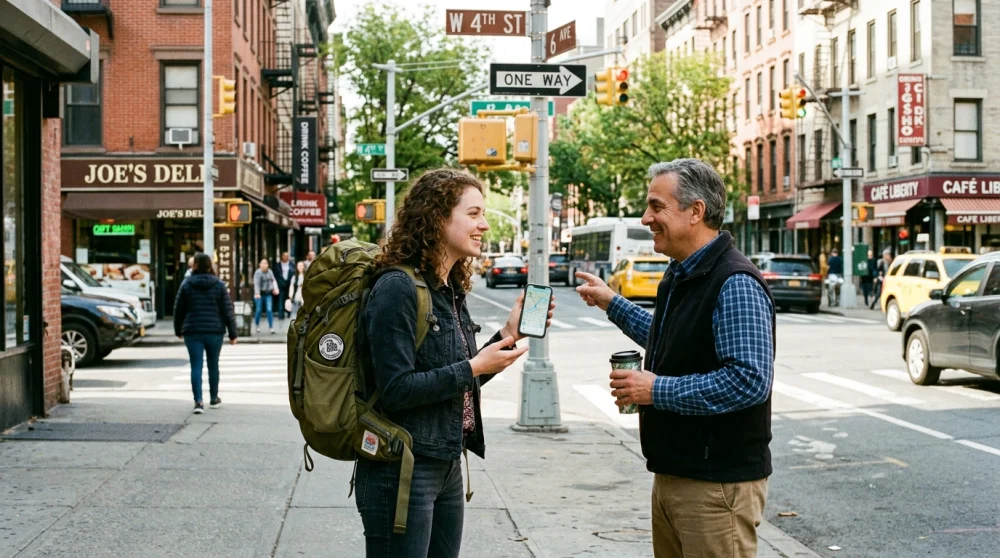
出行:问路和指路 (Getting Around: Asking for and Giving Directions)
- Excuse me, how do I get to the train station? - 打扰一下,请问怎么去火车站?
- Is it within walking distance? - 走路能到吗?
- Go straight and turn left at the light. - 直走,到红绿灯路口左转。
- It's about a 10-minute walk from here. - 从这里走大概10分钟。
- You can't miss it. - 你肯定不会错过它。/ 很容易找到。
- Am I going the right way? - 我走对路了吗?
在机场、酒店和公共交通 (At the Airport, Hotel, and Public Transit)
- I'd like to check in, please. - 我想办理入住,谢谢。
- What time is checkout? - 退房时间是几点?
- Which gate does my flight leave from? - 我的航班从哪个登机口起飞?
- Is there Wi-Fi here? - 这里有无线网络吗?
- How often does the bus come? - 公交车多久来一趟?
- Does this train go to downtown? - 这趟列车开往市中心吗?
- I have a reservation under my name. - 我有一个以我名字预订的房间/座位。
电话和短信的常用句子 (Common Sentences for Phone Calls and Texting)
自然地开始和结束电话 (Starting and Ending a Phone Call Naturally)
- Hey, is this a good time to talk? - 嘿,现在方便说话吗?
- I'm just calling to check in. - 我只是打个电话问候一下/确认一下情况。
- Anyway, I'll let you go. - 好了,我就不占用你的时间了。
- Talk to you later! - 稍后聊!
- Sorry, I missed your call. What's up? - 抱歉,我错过了你的电话。怎么了?
- Can I call you back in five minutes? - 我能五分钟后给你回电话吗?
常用短信短语和缩写 (Common Texting Phrases and Abbreviations)
- On my way! (OMW) - 我在路上了!
- Running late, be there in 10. - 迟到了,10分钟到。
- Got it, thanks! - 知道了,谢谢!
- LOL, that's hilarious. - 哈哈,太搞笑了。
- Let me know when you're free. - 你什么时候有空告诉我。
- Sounds good! - 听起来不错!
- NP (no problem). - 没问题。
如何有效地练习这些句子 (How to Practice These Sentences Effectively)
跟读和重复技巧 (Shadowing and Repetition Techniques)
跟读(Shadowing)是指听母语者说一个句子,然后立即模仿重复——就像回声一样。这能同时训练你的口部肌肉、听力和大脑。你可以找一段YouTube视频、播客甚至电影片段。听一句。暂停。大声重复。每天坚持15分钟,几周内你就会发现显著的进步。
使用闪卡和间隔重复应用程序 (Using Flashcards and Spaced Repetition Apps)
像Anki或Quizlet这样的应用程序可以让你创建学习句子的闪卡。关键在于“间隔重复”——应用程序会在你即将忘记某个句子之前再次展示给你,从而将它们锁定在你的长期记忆中,而不会浪费时间在已经熟练掌握的句子上。
非母语者的实战练习小贴士 (Real-World Practice Tips for Non-Native Speakers)
最好的练习发生在学习时间之外。用英语点咖啡,用英语给朋友发短信,在做饭时用英语描述你正在做的事情。目标是让英语成为你日常生活的一部分,而不仅仅是你“学习”的东西。即使是微小的练习时刻,也能迅速累积成效。
常见问题解答 (FAQ)
对于初学者来说,最常用的日常英语口语句子有哪些? (What are the most common daily use English sentences for beginners?)
对于初学者来说,最常用的是基本的问候语、简单的问题和简短的回答。像“How are you?”(你好吗?)、“Thank you so much”(非常感谢)、“Can I help you?”(我能帮你吗?)和“I don't understand”(我不明白)这样的句子几乎出现在每一次真实的对话中。从这些开始,逐步扩展。
我每天应该练习多少个句子? (How many sentences should I practice every day?)
质量胜于数量。目标是每天学习10到15个新句子。每个句子至少大声练习五次。深入学习一小批句子比匆匆浏览50个句子然后在第二天全部忘记要好得多。
仅仅通过记忆日常英语口语句子就能变得流利吗? (Can I become fluent just by memorizing daily use English sentences?)
记忆句子是一个很好的起点,但流利度还需要听力、真实对话以及理解语法模式。把这些句子看作是“积木”。你拥有的积木越多,就越容易搭建出你想表达的任何内容。
日常英语口语句子和俚语有什么区别? (What is the difference between daily use English sentences and slang?)
这些“日常用语”是每个人都能理解的标准短语,比如“What time is it?”(现在几点了?)或“Can I get a coffee?”(我能来杯咖啡吗?)。俚语则更非正式,且会随时间变化——像“lit”(很棒/很酷)或“no cap”(不吹牛)这样的词就属于俚语范畴。两者都有用,但建议先从标准的日常用语开始学习。