Learning how to speak good English fluently doesn't require a fancy school, an expensive tutor, or moving to another country. It requires the right daily habits. In this guide, you'll learn 12 simple things you can do every single day to go from stuck and frustrated to confident and fluent — even if you've been struggling for years.
Key Takeaways
- Fluency is about smooth communication, not perfect grammar. Stop waiting to be perfect before you start speaking.
- Small daily habits beat long weekend study sessions. Ten minutes a day is more powerful than three hours on Saturday.
- The biggest breakthroughs come from speaking out loud — not just reading or listening.
- You don't need to live in an English-speaking country to become fluent. You just need to surround yourself with English on purpose.
- Tracking your progress keeps you motivated and helps you see how far you've come.
Why Most People Struggle to Speak English Fluently
Millions of people study English for years and still freeze up in real conversations. Why? It usually comes down to two big problems.
The Gap Between Understanding English and Actually Speaking It
Here's something that trips people up: understanding English and speaking it are two completely different skills. You can watch an entire movie in English and follow along just fine. But when someone asks you a question, your mind goes blank.
That's because listening and reading are passive. Speaking is active. Your brain has to find the right words, put them in order, and push them out of your mouth — all in real time. If you haven't practiced that specific action, it's going to feel hard, no matter how many vocabulary words you've memorized.
Why Traditional Learning Methods Fall Short
Most English classes focus on grammar rules, textbook exercises, and written tests. That's great for passing exams. But it doesn't train your mouth, your ears, or your brain to handle a live conversation.
Think of it this way: you can read a hundred books about swimming, but you won't learn to swim until you get in the water. Speaking English fluently works the same way. You have to actually do it.
What It Really Means to Speak Good English Fluently
Before you dive into the habits, let's clear up what fluency actually means. It's probably not what you think.
Fluency vs. Perfection — Why the Difference Matters
Fluency doesn't mean you never make mistakes. It means you can express your thoughts smoothly, without long pauses or constant self-correction. Native speakers make grammar mistakes all the time. They say "me and him went" instead of "he and I went." They use filler words like "um" and "like."
The goal isn't to sound like a textbook. The goal is to communicate clearly and comfortably. Once you accept that, a huge mental weight lifts off your shoulders.
How Fluent Speakers Actually Think in English
Fluent speakers don't translate from their first language in their head. They think directly in English. When they want to say "I'm hungry," they don't first think of it in their native language and then translate. The English words just come.
This sounds like magic, but it's a trainable skill. The habits below are designed to help your brain make that shift.

12 Daily Habits That Actually Work
These habits are simple enough for anyone to start today. The key is doing them every day, even if only for a few minutes.
1. Think in English Before You Speak
Before you say something out loud, try forming the sentence in English inside your head first. At the grocery store, think "I need milk and eggs" instead of thinking it in your first language. This small switch starts training your brain to skip the translation step.
2. Shadow Native Speakers for 10 Minutes a Day
Shadowing means listening to a native speaker and repeating exactly what they say, right after they say it. Play a podcast, a YouTube video, or a TV show. Pause after each sentence and copy the speaker's words, speed, and tone. This builds your pronunciation and rhythm fast.
3. Read Out Loud Every Morning
Grab any English text — a news article, a blog post, a page from a book — and read it out loud. This trains your mouth muscles to form English sounds naturally. It also helps you connect written words with spoken sounds, which strengthens your vocabulary recall.
4. Record Yourself and Listen Back
Use your phone to record yourself speaking English for one or two minutes. Then play it back. You'll notice things you can't hear in real time — awkward pauses, repeated filler words, pronunciation issues. It feels weird at first, but it's one of the fastest ways to improve.
5. Learn Phrases and Chunks Instead of Single Words
Don't memorize the word "depend." Memorize "it depends on the situation." Learning words in phrases helps you speak in natural chunks instead of building sentences word by word. Native speakers talk in phrases, and so should you.
6. Talk to Yourself in English (Yes, Really)
Narrate what you're doing throughout the day. "I'm making coffee. Now I'm checking my email. I think I'll have lunch early today." It sounds silly, but it gives you constant speaking practice without needing a partner.
7. Set Your Phone and Apps to English
Change the language on your phone, your social media apps, and your computer to English. This forces you to read and interact in English dozens of times a day without any extra effort.
8. Practice With a Language Partner Daily
Find someone to speak English with, even for just 10 minutes a day. This could be a friend, a coworker, an online language exchange partner, or a tutor. Real conversation practice is the closest thing to a fluency shortcut that exists.
9. Watch English Content Without Subtitles
Start with shows or videos you've already seen, so you know the story. Then try new content. Without subtitles, your brain works harder to understand spoken English, which trains your listening skills and helps you absorb natural speech patterns.
10. Keep a Daily English Journal
Write three to five sentences in English every night about your day. Don't worry about mistakes. This habit strengthens your ability to form sentences and helps you notice gaps in your vocabulary that you can work on.
11. Replace Your Native-Language Scrolling With English Content
Instead of scrolling through social media in your first language, follow English-language accounts. Read English tweets, watch English reels, and browse English forums. You're going to scroll anyway — you might as well make it productive.
12. Do a Nightly 2-Minute Recap of Your Day in English
Before bed, spend two minutes speaking out loud about your day in English. What did you do? What was interesting? What are you planning for tomorrow? This recap ties together everything you've practiced and ends your day with active English output.

How to Stay Consistent Without Burning Out
The hardest part isn't starting these habits. It's keeping them going.
Stack Habits Onto Routines You Already Have
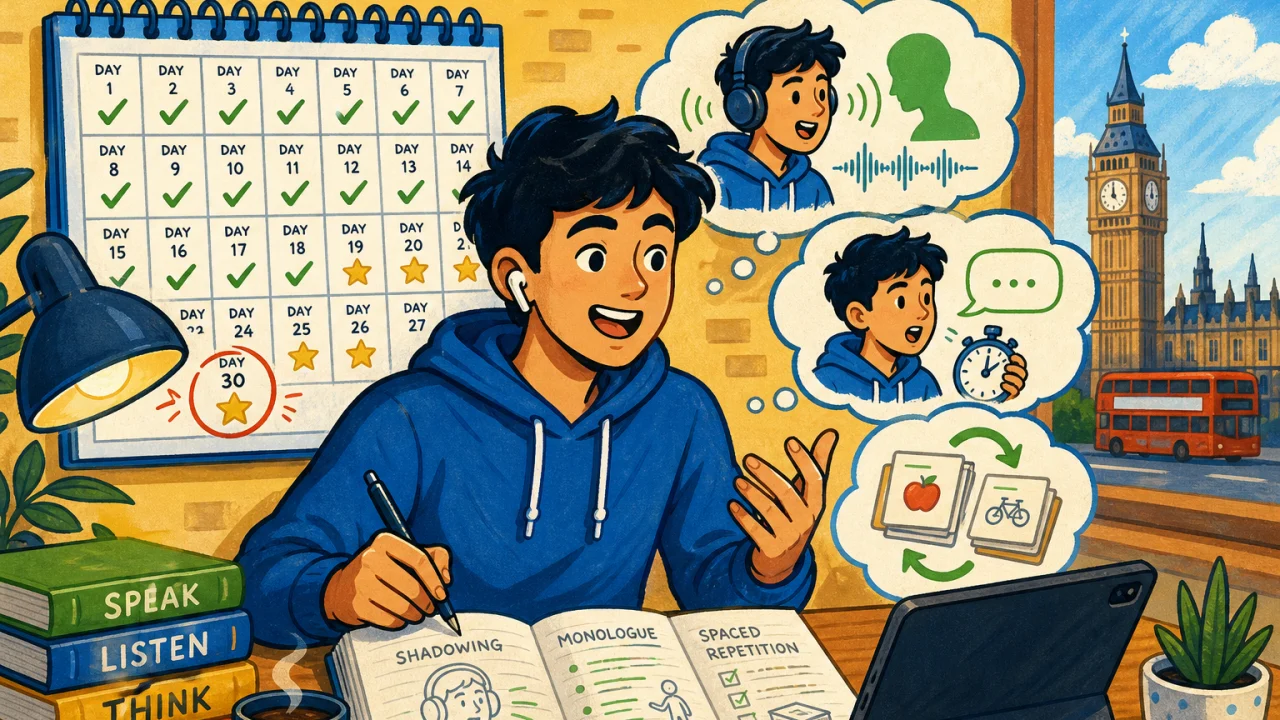
Don't create a whole new schedule. Attach English habits to things you already do. Read out loud while you drink your morning coffee. Shadow a podcast on your commute. Do your nightly recap while brushing your teeth. When a habit is connected to an existing routine, it sticks.
Track Your Progress With a Simple Fluency Log
Keep a small notebook or use a notes app. Each day, write down which habits you completed and one thing you noticed about your English. Maybe you used a new word naturally. Maybe you spoke for 30 seconds without pausing. Tracking these small wins keeps you motivated when progress feels slow.
Common Mistakes to Avoid on Your Fluency Journey
Knowing what not to do is just as important as knowing what to do.
Obsessing Over Grammar Before Speaking
Grammar matters, but not as much as you think — especially at the start. If you wait until your grammar is perfect to start speaking, you'll never start. It's better to speak with mistakes than to stay silent with perfect grammar notes in a notebook.
Avoiding Conversations Out of Fear
Fear of embarrassment is the number one fluency killer. Everyone makes mistakes when they learn a new language. Most people are patient and kind when they see you trying. The discomfort of a messy conversation fades fast. The regret of never trying doesn't.
Comparing Your Progress to Native Speakers
Native speakers had a 20-year head start. Comparing yourself to them is like comparing your first painting to something in a museum. Compare yourself to where you were last month. That's the only comparison that matters.
Frequently Asked Questions
How long does it take to speak English fluently with daily practice?
It depends on your starting level and how much time you put in each day. Most learners see noticeable improvement within three to six months of consistent daily practice. Full conversational fluency can take one to two years, but you'll feel more confident much sooner than that.
Can I become fluent in English without living in an English-speaking country?
Absolutely. Millions of fluent English speakers have never lived in an English-speaking country. With the internet, you have access to unlimited English content, conversation partners, and practice tools. What matters is creating an English-rich environment wherever you are.
What is the single most effective habit for improving spoken English?
If you could only pick one, practice speaking with a real person. Conversation forces your brain to listen, process, and respond in real time. It builds fluency faster than any passive activity like reading or watching videos alone.
Is it too late to become fluent in English as an adult?
Not at all. Adults actually have some advantages — better discipline, stronger study skills, and a deeper understanding of language concepts. Children pick up pronunciation more easily, but adults can absolutely reach fluency with consistent practice.
How do I stop translating from my native language in my head?
Start by thinking in English during simple moments — ordering food, describing what you see, narrating your walk to work. The more you practice thinking directly in English, the less your brain will rely on translation. Shadowing native speakers also helps because it trains you to process English at natural speed.
Final Thoughts — Fluency Is Built One Day at a Time
Learning how to speak good English fluently isn't about one big breakthrough. It's about showing up every day with small, simple habits that add up over time. You don't need to do all 12 habits at once. Start with two or three that feel easy. Build from there.
The person who practices for 10 minutes every day will always outrun the person who studies for five hours once a month. Fluency isn't a gift. It's a habit. And now you have 12 of them to choose from.
Start today. Your future fluent self will thank you.